

Putin, IAEA’s Grossi discuss nuclear safety
Moscow meeting highlights cooperation amid Zaporizhzhia risks
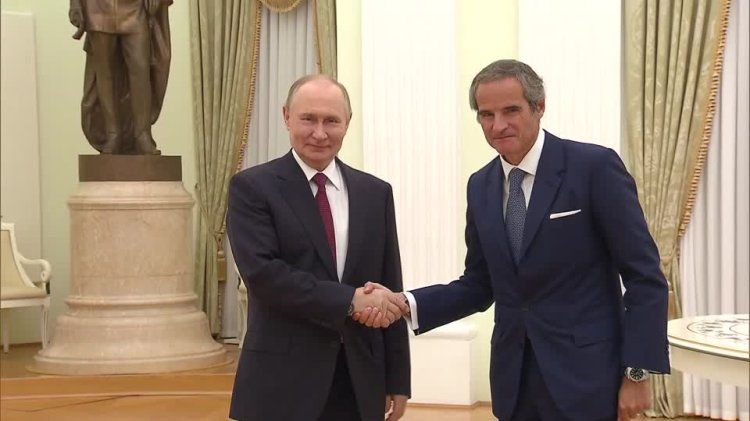
Russian President Vladimir Putin and IAEA Director General Rafael Grossi held talks in Moscow during World Nuclear Energy Week, discussing nuclear energy cooperation, non‑proliferation and safety and security challenges. Putin said Russia’s cooperation with the IAEA covers “almost all areas,” stressing Moscow’s long history with the agency since its 1957 founding and pledging to provide “all possible assistance” to address global nuclear safety issues. Rosatom head Alexey Likhachov attended the meeting; Grossi thanked Russian authorities for supporting the IAEA’s professional, impartial work.
Grossi highlighted the agency’s role in ensuring nuclear projects meet high safety and non‑proliferation standards and noted strong international demand for Rosatom’s services, especially from countries in Asia and Africa. He said the IAEA’s presence is important for supporting such projects and implementing them constructively.
The visit follows Grossi’s earlier engagements in Russia this year, including a February meeting with Likhachov focused on safety at the Zaporizhzhia Nuclear Power Plant, currently under Russian control. Grossi has issued warnings that military actions continue to pose serious risks to Zaporizhzhia, and the IAEA’s recent General Conference adopted a resolution urging Russia to withdraw from the plant. Kremlin spokesperson Dmitry Peskov said Putin and Belarusian President Alexander Lukashenko welcomed Grossi’s reported willingness to run for UN secretary‑general.
The talks come amid wider strains in relations between the IAEA and some member states: Iran enacted a law in July suspending routine cooperation with the agency and requiring Supreme National Security Council approval for inspector access, a move that limits the IAEA’s oversight. Observers say the Moscow meeting underscores both continued engagement between Russia and the IAEA on technical and safety matters and the geopolitical tensions shaping international nuclear governance.