Banksy mural targets UK protest crackdown
Artwork at Royal Courts sparks debate on dissent and free expression
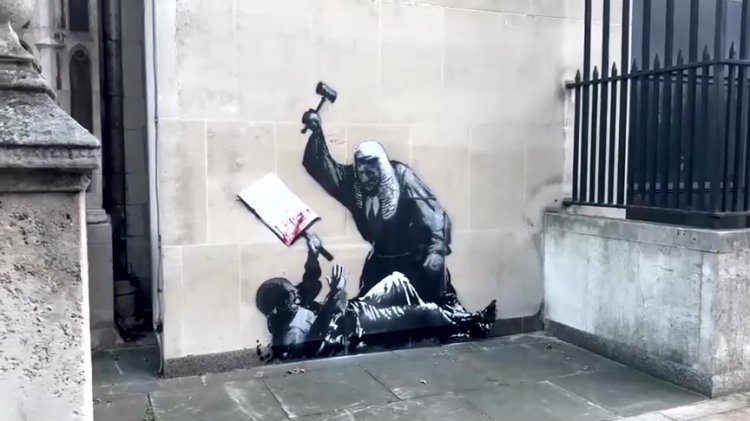
A new mural by the elusive British street artist Banksy has emerged on the exterior wall of London's Royal Courts of Justice, depicting a judge striking a protester with a gavel. The artwork features a bewigged judge attacking a protester who lies on the ground, clutching a blood-splattered placard, symbolizing the suppression of dissent. This piece is interpreted as a commentary on the recent mass arrests of nearly 900 demonstrators supporting Palestine Action, a group recently designated as a terrorist organization by the UK government.
The mural's appearance has sparked significant public attention and debate, with many viewing it as a critique of state repression against peaceful protests. Following its unveiling, authorities quickly covered the mural with black plastic sheets and installed metal barriers, guards, and CCTV around the area, citing the need to preserve the historical integrity of the Grade I-listed building. Plans for its removal have also been announced.
Activists from the group Defend Our Juries praised the mural, stating it powerfully illustrates the brutality faced by citizens exercising their right to protest. They argue that the government's crackdown on demonstrations related to Palestine Action represents a dangerous erosion of civil liberties in the UK. Conversely, government officials maintain that while artistic expression is valued, the law must be upheld regarding historic buildings, asserting that the Royal Courts of Justice is not an appropriate venue for political statements.
Banksy confirmed his authorship of the mural by posting it on his official Instagram account, further fueling discussions about the balance between free expression and the protection of heritage sites. This latest work continues Banksy's tradition of politically charged art, which has previously addressed issues such as state violence, social inequality, and the plight of refugees. The mural has intensified discussions in the UK about freedom of expression, the right to protest, and the limits of state power, with many believing its message will resonate long after its physical removal.