China launches first wind-solar-heat plant
Qinghai hybrid facility integrates 700 MW of clean power
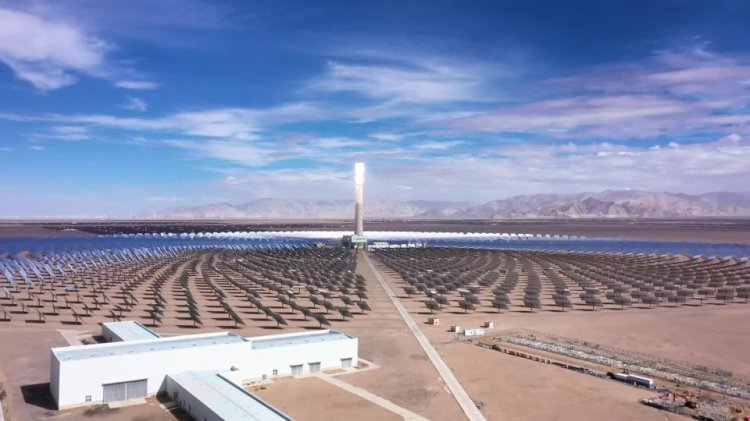
A groundbreaking renewable energy project has been established in Golmud City, located in the Mongolian-Tibetan Autonomous Prefecture of Haixi, northwest China's Qinghai Province. This facility is recognized as the world's first wind-solar-heat storage project, marking a significant advancement in clean energy development. Construction commenced in July 2017, and the project was fully operational by September 2019, boasting a total installed capacity of 700 megawatts. This includes 200 megawatts from photovoltaic solar panels, 400 megawatts from wind turbines, and 50 megawatts each from solar thermal generation and energy storage systems.
The innovative design of the project allows for a harmonious integration of various renewable technologies, ensuring a reliable electricity supply despite the intermittent nature of wind and sunlight. Solar panels generate power during the day, while wind turbines contribute when conditions permit. The thermal storage system plays a crucial role by storing excess heat energy for later conversion into electricity, thus stabilizing the energy supply.
Aerial images of the site reveal the extensive scale of the project, with rows of blue photovoltaic panels and clusters of wind turbines set against the desert landscape. The project is strategically located in one of China's sunniest and windiest regions, making it an ideal site for testing multi-energy integration.
Engineers have noted that this hybrid approach minimizes grid fluctuations, enhances the local consumption of clean energy, and improves transmission efficiency to other provinces. Qinghai has emerged as a renewable energy hub, transmitting significant amounts of solar and wind energy to major urban centers.
This initiative aligns with China's broader goals of achieving carbon neutrality and reflects the government's support for experimental energy bases that combine various renewable sources and storage methods. The Qinghai project serves as a model for future developments, demonstrating how different energy technologies can work together effectively.
Beyond its technical achievements, the project symbolizes China's leadership in renewable technology on a global scale, showcasing how regions with challenging landscapes and abundant natural resources can be transformed into sustainable growth engines.