Fossil porpoise unveiled in Peru desert
Eight-million-year-old skeleton offers rare insight into cetacean evolution
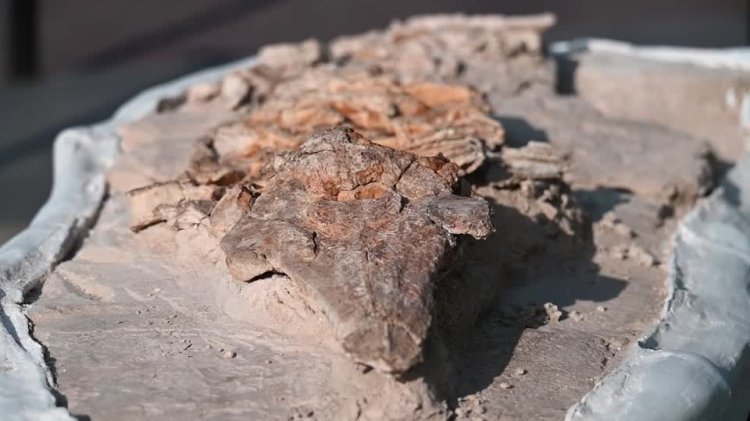
Paleontologists in Peru unveiled a remarkably complete skeleton of a fossilized porpoise that lived between eight and twelve million years ago. The specimen was recovered from the Ocucaje Desert, a hot, arid region about 200 miles south of Lima that once formed part of a shallow marine basin on the ancient Pacific coast. Researchers say the desert’s sedimentary layer preserved marine life for roughly 45 million years, and the new find adds to a growing catalog of prehistoric cetaceans and other sea creatures uncovered in the area.
The discovery, announced at a press conference by Mario Urbina and colleagues, follows earlier Peruvian finds such as a 16‑million‑year‑old skull of the largest known river dolphin from the Amazon and a 9‑million‑year‑old ancestor of the great white shark. The Ocucaje porpoise, a small member of the Phocoenidae family, displays the rounded body, blunt nose and triangular dorsal fin typical of modern porpoises, offering scientists a rare opportunity to examine the anatomy and likely behavior of early small cetaceans.
The fossil was embedded in sediment layers that have already yielded whales, dolphins, sharks and crocodilians, indicating a richly diverse marine ecosystem in what is now a desert. Its exceptional preservation will allow detailed study of how these mammals adapted to changing ocean conditions and may illuminate the evolutionary pathways that led to today’s cetacean diversity.
The specimen will undergo further preparation at local research facilities before being shared with the international scientific community. Researchers anticipate that analysis of the porpoise’s morphology and isotopic composition will shed light on the climate and environmental shifts that shaped marine mammal evolution in the South American Pacific during the Miocene epoch, reinforcing Peru’s status as a premier site for understanding the deep‑time history of marine life.