

Greece hit by strike over labor reforms
Workers protest draft law allowing shifts up to 13 hours
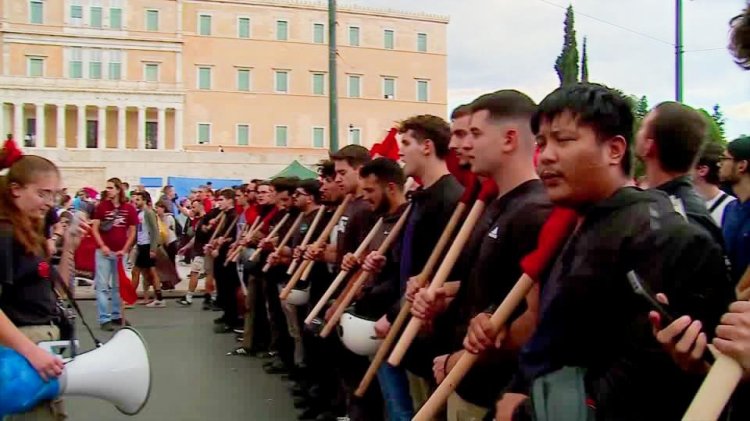
Thousands of workers across Greece halted trains, ferries, taxis and public services in a one‑day general strike to oppose a draft labor reform that would permit employers to extend shifts up to 13 — hours, far beyond the current eight‑hour norm. The protest, organized by the country’s largest private and public trade unions, saw teachers, seafarers, bank employees and other sectors march to parliament in Athens, chanting against what they described as “modern slave labour” and demanding the preservation of the eight‑hour workday.
The proposed bill would give companies greater flexibility in short‑term hiring, amend private‑sector annual‑leave rules and allow up to 13‑hour workdays for employees with a single employer, limited to 37 days a year and an average of 48 hours per week. Unions argue the limits are easily breached and would erode gains secured over a century, including collective‑bargaining rights curtailed during the financial crisis. They call for a standard 37.5‑hour week and higher wages, noting that despite recent minimum‑wage hikes, Greeks lag behind EU peers in purchasing power amid rising housing and food costs.
The government counters that the reform is not mandatory, would apply only in “exceptional” cases with worker consent, and offers a 40 % overtime premium. Labor minister statements stress that the eight‑hour day and five‑day week remain the default, and that the measure responds to a demand for a more flexible labour market.
Personal testimonies highlighted the social impact: a National Bank employee and mother of two warned that 13‑hour shifts would leave no time for family, describing the physical and psychological toll as “exhausting.” Public‑sector unions also demanded wage increases rather than longer hours.
Transport networks were largely paralyzed; metros, trains, buses and ferries stopped, while schools, hospitals and municipal services faced disruptions. The strike represents one of the most significant labour mobilisations in recent Greek history, underscoring deep tensions over reforms, low wages, high living costs and job insecurity.