Indonesia school collapse kills six
Dozens trapped in East Java as rescuers race to find survivors
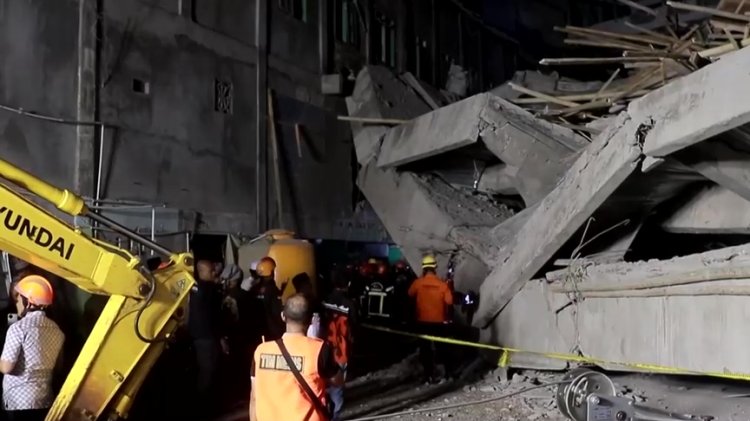
Rescuers in East Java have been working nonstop after the Al Khoziny Islamic boarding school collapsed during afternoon prayers, crushing a packed prayer hall. The roof and upper floors gave way, killing at least six people and leaving dozens trapped. Emergency teams have pulled survivors from the rubble, relying on hand tools, wooden beams and narrow tunnels rather than heavy machinery to avoid further collapses.
Investigations reveal the building was undergoing unauthorized construction, adding extra floors that the foundation could not support. Poor‑quality materials and structural weakness are believed to have caused the failure. Authorities have launched a full inquiry, questioning contractors and school administrators.
Around 59 students remain missing, and the death toll could rise. Families have gathered at the site, some hopeful, others in tears as bodies are retrieved. Volunteers assist professional rescuers, providing food and shelter for waiting relatives, while local hospitals stay on high alert for additional casualties.
A notable rescue involved 13‑year‑old Syailendra Haikal, who was freed after days of tunneling under unstable debris. He suffered moderate injuries—bruises on his face and legs—and was taken to hospital. He was among seven teenage boys extracted from a pocket of the wreckage; two were found dead.
Basarnas director Yudhi Bramantyo said no further signs of life have been detected and officials are considering the use of excavators, though their deployment could end manual digging chances. Thermal cameras have been employed overnight to search for survivors.
The disaster has sparked a broader debate on safety standards in Indonesia’s many pesantrens, many built without proper oversight. President Joko Widodo expressed condolences and ordered emergency support for survivors, emphasizing the need for stricter enforcement of building codes to prevent similar tragedies.
Complicating the rescue, a tremor from an earthquake in nearby Sumenep may have compacted the debris further. The number of presumed buried victims was revised from 91 to 59 as authorities reconcile school attendance lists with missing‑person reports.
Overall, the operation highlights the challenges of rescuing victims from an unstable, illegally modified structure, the emotional toll on families, and the urgent call for regulatory reforms in Indonesia’s religious‑school sector.