Markets eye Hassett as potential Fed chair
Speculation grows over independence and policy signals
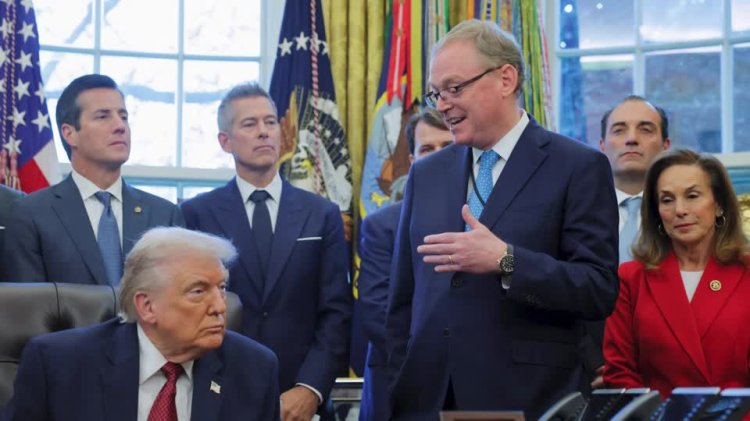
If White House adviser Kevin Hassett is nominated to lead the Federal Reserve starting in May, markets would treat him as an effective "shadow Fed Chair" during the interim, closely parsing his remarks for signals on future policy. President Donald Trump signaled plans to name his choice in January, and reports identified Hassett — a former chair of the Council of Economic Advisers and a longtime Trump economic confidant — as the frontrunner. Betting markets reacted quickly, shifting odds in his favor and displacing Fed Governor Christopher Waller, who had been considered a leading contender.
Hassett is known for championing pro-growth tax policies, deregulation and a preference for greater transparency and predictability in monetary policy. Supporters point to his academic credentials and White House experience as qualifications for guiding the Fed amid slowing growth and lingering inflation concerns. They say his priorities could tilt policy toward supporting expansion while seeking to avoid reigniting inflation.
However, critics warn that selecting a close presidential adviser risks undermining the Fed’s independence — a cornerstone for credible monetary policy. Observers recall the turbulent relations between Trump and past Fed leaders and argue that appointing someone so closely tied to the administration could blur the line between political objectives and central bank decision-making. Economists have expressed concern that perceived politicization might complicate efforts to manage inflation expectations and financial stability.
Hassett has publicly criticised heavy reliance on complex models and has advocated for clearer communication from the Fed, though he has not laid out detailed plans for responding to specific scenarios, such as interest-rate moves during politically sensitive periods. The White House has remained formally silent on nominations, and other candidates reportedly remain under consideration, but the prominence of Hassett in media reports reflects an intent to reshape economic institutions if the administration returns to power.
Market analysts say even speculation about a Hassett nomination shifts investor expectations on interest-rate paths, regulatory stances and the Fed’s likely tilt on growth versus inflation priorities. Beyond price moves, the debate centers on institutional norms: whether a Fed chaired by a close political ally would maintain operational independence and the public’s trust. Lawmakers, financial leaders and market participants will likely scrutinize any formal nomination for signs of commitment to the Fed’s dual mandate and to preserving its nonpartisan authority.