NASA launches new telescope for cosmic quest
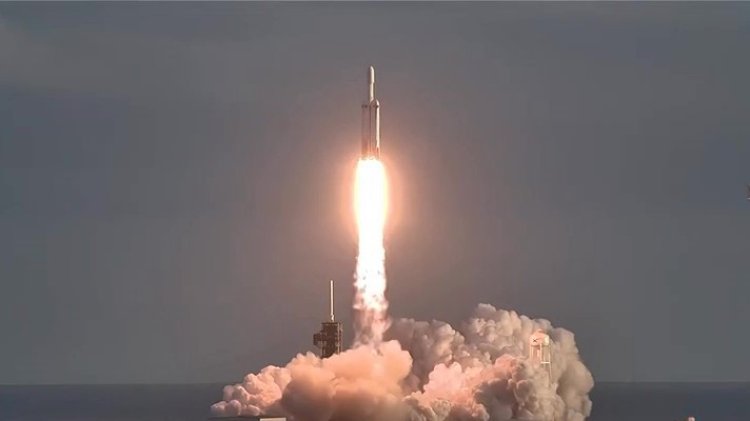
NASA has launched the Nancy Grace Roman Space Telescope aboard a SpaceX Falcon Heavy rocket from Kennedy Space Center, Florida. This newest observatory will revolutionize our understanding of the cosmos, focusing on dark energy and dark matter. The Roman Space Telescope features a wide field of view, hundred times broader than Hubble's, allowing it to survey vast regions, construct cosmic maps, and capture millions of objects in a single observation. Its 300-megapixel near-infrared camera and a specialized coronagraph are key instruments. It will investigate dark energy, the mysterious force accelerating the universe's expansion. Mapping billions of galaxies, Roman will determine expansion rates and shed light on this elusive component. It will also probe dark matter's distribution, the invisible substance holding galaxies together. Beyond cosmology, Roman is poised for groundbreaking exoplanet research. It expects to discover thousands of exoplanets, providing a statistical census of similar systems. Its advanced instruments will analyze light from these worlds, detailing their chemical composition and habitability. It will journey three months to its operational orbit at Lagrange Point 2, 1.6 million kilometers from Earth. This location provides an unobstructed deep space view for extensive surveys. The mission is planned for five years, with potential for five more, promising a decade of discoveries. Named after NASA's first chief of astronomy, the Roman Space Telescope represents a significant leap in understanding our place in the vast universe.