Divers and chess masters compete underwater
Poland hosts world championship for diving chess
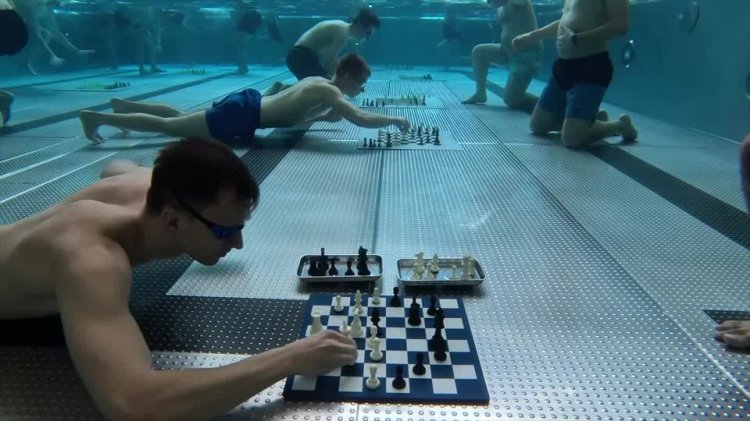
Lithuanian Grandmaster Paulius Pultinevičius and Poland’s Anna Andrzejewska won the 2026 world diving chess championships in Tarnowo Podgórne, Poland, a niche hybrid sport that combines freediving endurance with classical chess. The tournament drew 62 competitors from around the world and used specially designed weighted, magnetic waterproof boards fixed to pool floors; players held their breath underwater to consider moves and surface between turns to execute them, with strict timing rules and penalties for violations.
Pultinevičius, 24, entered the event as the highest-ranked player and advanced to the 18-player final on tiebreaks before dominating the last day by winning four consecutive matches to claim his first diving chess world title. Polish International Master Kamil Dzida finished runner-up and Indian Grandmaster Harshit Raja took bronze. Andrzejewska produced a commanding run to capture the women’s crown, combining precise strategic play with consistent breath-control discipline.
Organizers described the format as a test of both cognitive skill and physiological resilience: competitors must sustain concentration and rapid calculation under severe oxygen constraints, blending elite freediving techniques with intensive chess preparation. Matches alternated between surface play and submerged thinking periods, with spectators following action via overhead viewing and underwater cameras that projected board positions and athlete performance in real time.
The event showcased the sport’s experimental appeal and growing European following, as officials said the championships aim to expand internationally and push the boundaries of cognitive sports by measuring how well players perform logical reasoning under extreme physical stress. The 2026 edition, billed as the largest World Diving Chess Championships yet staged, is expected to boost visibility for the format and encourage further development of competitions that merge athletic endurance with strategic competition.