


Mexico and EU sign major free trade deal
Pact expands trade ties beyond industrial goods
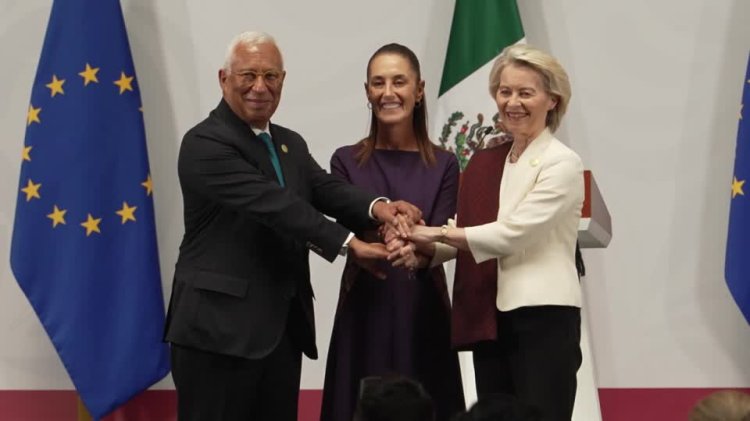
Mexico and the European Union signed a long-delayed free trade agreement, updating a 2000 pact that covered only industrial goods to include services, government procurement, digital trade, investment and agricultural products. Leaders gathered in Mexico City for the signing, marking a first summit in over a decade between top EU and Mexican officials. The accord aims to diversify trade away from the United States and strengthen economic resilience amid global uncertainty and recent protectionist measures.
Under the deal, almost all goods will receive duty-free access, with quotas applying for some agricultural items; examples cited include Mexican chicken and asparagus and European milk powder, cheese and pork. Mexico’s economy ministry projects Mexican exports to the EU could rise from about $24 billion annually to roughly $36 billion by 2030. The EU currently exports around $65 billion in goods to Mexico. Trade between the two partners has grown about 75% in a decade, concentrated in transport equipment, machinery, chemicals, fuels and mining products.
Negotiations were completed in 2025 but signing was postponed while the EU prioritized deals with other partners and Mexico navigated sensitive relations with the U.S. during talks to extend the USMCA framework; more than 80% of Mexico’s exports still go to the United States. The EU Parliament will vote on the agreement and is expected to approve it within months.
Supporters say the pact will broaden market access, boost investment, and deepen cooperation in sectors such as renewable energy, critical minerals, automotive manufacturing and advanced technology. Business groups welcomed the prospect of increased investment flows and supply‑chain diversification, while some industries voiced concerns about heightened competition and regulatory harmonization. The agreement’s completion follows prolonged political and technical negotiations over standards, environmental and agricultural rules, and underscores a wider global trend toward seeking alternative trade partners and reducing reliance on any single market.