

Pope Leo leads interfaith peace gathering
Leaders unite at Rome’s Colosseum to call for global harmony
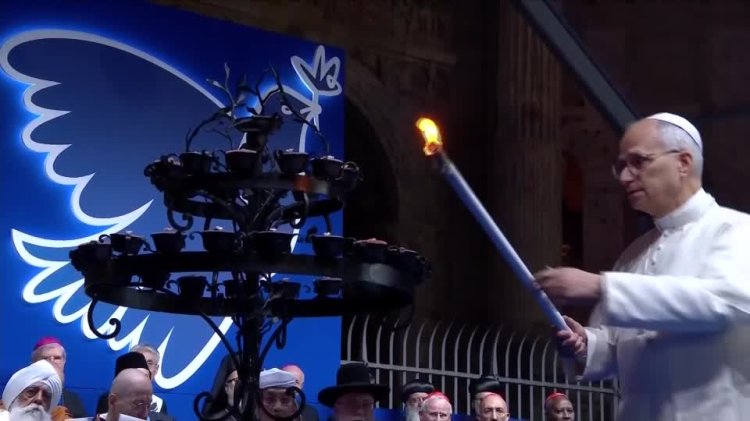
Pope Leo participated in an interfaith prayer gathering at Rome’s Colosseum, joining religious leaders, international advocacy groups and diplomatic representatives to call for global peace and reinforce interreligious dialogue. Organized by the Community of Sant’Egidio, the ceremony marked the 60th anniversary of Nostra Aetate, the Second Vatican Council declaration that reshaped Catholic relations with other faiths. Hundreds of faith delegates from Christianity, Judaism, Islam, Buddhism, Hinduism and other traditions took part in a program of shared readings, musical performances and moments of silence, invoking solidarity for victims of war, natural disasters and acts of hatred.
Speaking to the assembled crowd, Pope Leo said the world “is thirsting for peace” and urged an end to war and violence. He described religion as “a bridge, not a barrier,” calling on believers to practice dialogue, respect and compassion rather than using faith to justify division. His remarks emphasized listening, empathy and the moral courage required to overcome prejudice and counter “voices of division” that exploit religion for political ends. The pope’s message echoed the spirit of Nostra Aetate, which repudiated collective blame against Jews and encouraged mutual understanding and cooperation among religions.
The Colosseum, historically associated with persecution of early Christians, was intentionally chosen as the venue and was illuminated during the event. Organizers and participants highlighted the symbolic transformation of the ancient amphitheatre into a site of reconciliation and hope. The ceremony concluded with religious leaders lighting candles together as a symbol of shared commitment to peace. A joint declaration issued at the close urged renewed solidarity, enhanced environmental responsibility and concrete efforts toward reconciliation across communities and nations.
Vatican officials framed the gathering as part of an ongoing papal emphasis on interfaith engagement amid escalating global tensions in several regions. Observers described the assembly as one of the more diverse interreligious events in recent Vatican history, noting the significance of representatives from multiple faith traditions standing together in public witness. The liturgical and cultural elements—sacred text readings, cross-traditional musical pieces and silent reflection—were intended to model mutual respect and spiritual cooperation.