Rain worsens crisis for Gaza families
Heavy flooding in fragile tents has endangered displaced residents
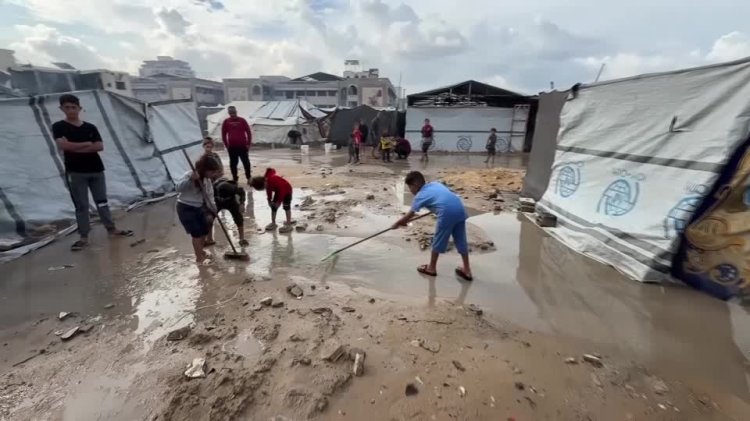
Heavy rainfall has exacerbated the dire situation for displaced families in Gaza City, as rainwater flooded makeshift tents, leaving them with soaked bedding and personal belongings. Displaced individuals like Abu Ahmed al-Mtawaq highlighted the severity of the situation, expressing concerns about the consequences of prolonged rainfall on their living conditions. Nearby, Mariam al-Najjar recounted waking to water pouring into her family's shelter, forcing them to stand through the night to avoid being submerged.
The humanitarian crisis in Gaza follows two years of conflict that has resulted in significant devastation, including the deaths of approximately 68,000 people due to ongoing Israeli bombardments. A U.S.-brokered ceasefire that came into effect earlier has halted extensive hostilities, which began after a Hamas-led attack that resulted in the loss of around 1,200 lives and the abduction of hostages.
Relief agencies report that heavy rainfall has intensified already difficult living conditions for thousands of displaced Palestinians. Many families are now forced to cope with flooding in their flimsy shelters as winter approaches. Aid workers note that most tents, constructed from thin plastic or fabric, are inadequate for protection against the elements. Consequently, rain has infiltrated these shelters, damaging belongings and forcing families to seek higher ground or crowd into smaller spaces.
In the most severely affected areas, families have been found standing in ankle-deep water within their tents, and makeshift drainage systems are being created to divert water from sleeping areas. Mothers have described their children waking up drenched and shivering due to the lack of adequate shelter.
The flooding also raises serious health and safety concerns. The combination of damp conditions, damaged insulation, and insufficient heating or warm clothing increases the risk of hypothermia, respiratory issues, and other weather-related ailments, particularly among vulnerable populations such as children and the elderly. Humanitarian agencies have emphasized that without immediate access to shelter, warm clothing, blankets, and adequate housing, the displaced population could face a worsening humanitarian crisis.
This situation illustrates that the impact of conflict extends far beyond immediate violence; displaced Palestinians are now combatting existential threats presented by the harsh winter weather, struggling to survive under tarpaulins and plastic instead of secure homes.