Artemis II to fly crew around Moon
Mission will test systems ahead of lunar landings
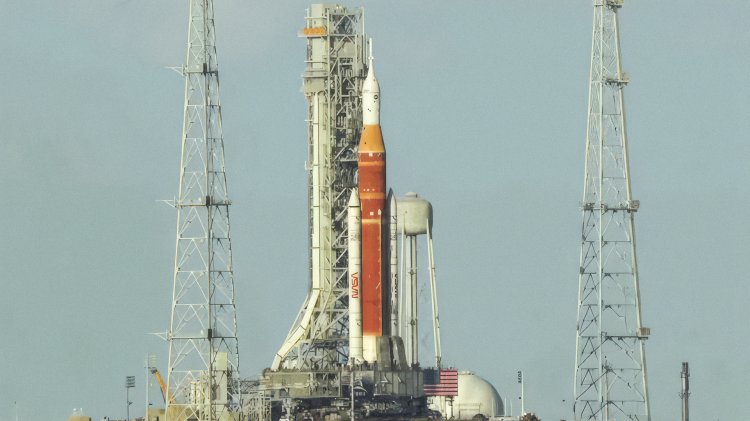
NASA plans to launch a four‑person crew—three U.S. astronauts and one Canadian—on the first crewed lunar mission in over 50 years under the Artemis II program, sending them on a roughly 10‑day flight that will carry humans farther from Earth than any mission since Apollo. The flight will use the Space Launch System rocket and the Orion spacecraft to orbit the Moon and return, testing life‑support, propulsion, navigation and crew procedures ahead of future lunar landings.
The mission follows an uncrewed Artemis I test and is framed as a critical systems and operations validation for subsequent missions that aim to establish sustained human presence around and on the Moon. Artemis II’s launch windows extend from early February through April, with an initial target conditioned on a full “wet dress” countdown rehearsal days beforehand to surface any launch issues. NASA says safety remains paramount amid prior delays caused by technical fixes and supply‑chain constraints.
Artemis seeks to build longer‑term capabilities—such as the planned Gateway lunar outpost—and to use in‑situ resources like water ice at the lunar poles to support longer stays and eventual Mars missions. The program emphasizes international and commercial partnerships: the European Space Agency supplied Orion’s service module and private firms are contracted to develop lunar landers. NASA also highlights inclusion goals for future landing crews.
Costs and schedule risks have drawn scrutiny from critics, while supporters point to technological and scientific returns. Engineers continue final testing and astronauts are training in emergency procedures and deep‑space operations. If successful, Artemis II would validate systems and pave the way for Artemis III, the next mission targeted to attempt a crewed lunar landing, restarting human exploration beyond low Earth orbit after a half‑century hiatus.