Elite aerial athletes compete in new hybrid obstacle course
The event combines wingsuits, jet suits and parachutes in one course
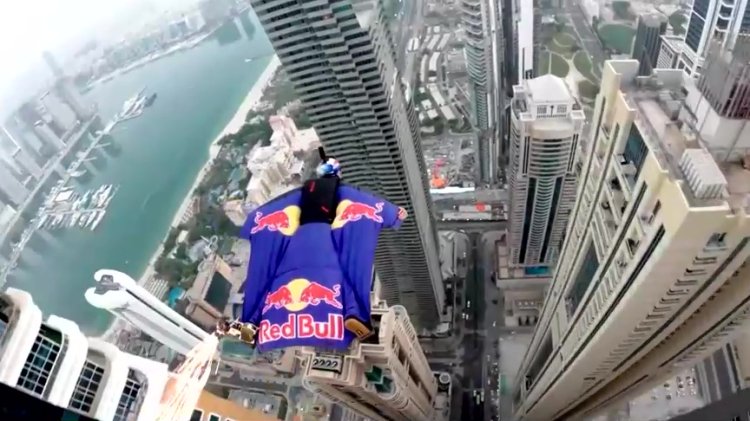
A new high-altitude competition has united elite aerial athletes in a single, continuous “ultimate obstacle course” that blends speed, precision, acrobatics and equipment transitions. The course—designed to showcase and test multiple flying disciplines—features roughly 15 obstacles laid out across distinct aerial zones: wingsuit slalom gates, paramotor-powered segments, jet-suit speed legs and parachute or BASE-jump transitions into low-altitude manoeuvres. Competitors must thread tight turns, manage rapid altitude changes, pass through gates set on rock ledges or man-made pylons, execute mid-course equipment handoffs and finish with precision landings across mountainous and urban-scale environments.
Participants come from a mix of wingsuit, skydiving, paramotor and jet-suit communities, many recognised as top athletes in their fields. The format demands more than raw speed: athletes are judged on combined technical skills including high-G control, aerial acrobatics, timed transitions between rigs and accuracy in targeting and landings. One illustrative sequence has a wingsuit pilot slaloming through gates, linking to a paramotor pilot who carries momentum into a jet-suit segment, and concluding with a pinpoint parachute touchdown.
Organisers highlight considerable safety and technical innovation. Competitors carry GPS and telemetry for real-time monitoring of speed, altitude and course compliance; gates and obstacles use collapsible, low-impact materials; transition zones are fitted with safety nets and drone teams provide overhead observation and data. The event also showcases advances in jet-suit thrust control, lighter paramotor units and wingsuit designs with improved glide ratios and control surfaces.
Beyond spectacle, the event signals a convergence of extreme aerial sports toward formats suited for spectatorship and broadcast, potentially opening commercial pathways and formal competitive structures for disciplines that were previously niche or stunt-focused. Organisers suggest the concept could be adapted for urban settings or incorporated into larger sports festivals as a repeatable blueprint.
The format carries intrinsic challenges: managing high-speed altitude transitions, complex equipment handoffs and exposure to variable terrain heighten risk, and the cross-disciplinary skill set required is unusual and technically demanding. Some athletes noted the format’s uniqueness may make this edition a one-off benchmark rather than a routinely repeated contest. Nonetheless, the event sets a new standard for hybrid aerial competition, combining athletic virtuosity, technological progress and a fresh model for spectator-friendly extreme sports.