

Deadly quake devastates eastern Afghanistan
Over 1,400 killed as rescue and aid efforts face obstacles
A powerful magnitude-6.0 earthquake struck eastern Afghanistan’s Kunar Province shortly before midnight, followed by a 5.5‑magnitude aftershock, causing catastrophic destruction across Kunar and neighbouring Nangarhar. At least 1,411 people have been killed and more than 3,100 injured, with figures expected to rise as remote communities are reached. Mud‑brick homes in mountainous areas collapsed en masse, flattening entire villages; quakes triggered landslides and recent heavy rains have blocked roads and hampered rescue efforts.
Rescue operations continue under extremely difficult conditions. Afghan authorities, limited by infrastructure and resources, have airdropped commando teams to isolated settlements unreachable by road. Helicopters are evacuating the wounded where possible, but many villages remain accessible only on foot after teams walked hours to reach them. Communications are patchy or non‑existent in much of the affected zone.
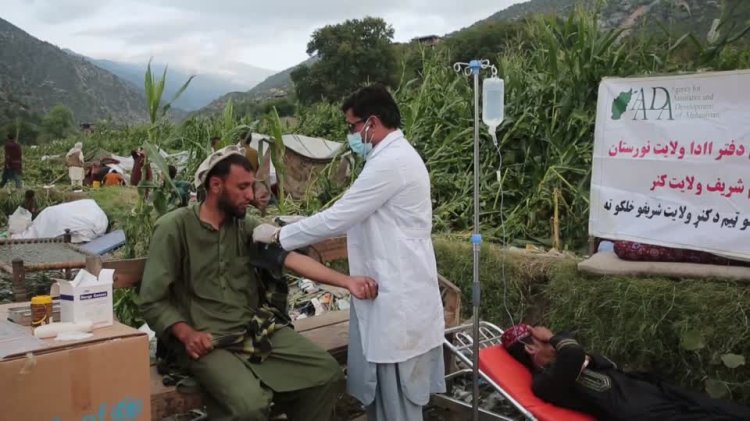
The United Nations, UNICEF, UNHCR, the World Food Programme and medical agencies are on the ground—dispatching assessment teams, trauma kits, emergency camps, tents, blankets and solar lamps, and increasing humanitarian air service flights from Kabul. Local community members have surged into affected areas to assist with search and rescue and to bring food and water. Health services are stretched: damaged clinics are treating patients outdoors and medicines are difficult to deliver, often moved on foot from the nearest supported hospital.
Aid shortages are acute. The WFP warns food supplies could run out in about four weeks without additional support. While some countries, including the UK, India, Australia and South Korea, have pledged assistance, overall humanitarian funding for Afghanistan remains far below needs; of the $2.4 billion required this year, only $685.8 million has been provided. Donor hesitation—partly driven by concerns over the de facto authorities’ restrictive policies—is constraining the international response.
UN agencies stress urgent needs for emergency shelter, medical supplies, drinking water and food, and call for immediate donor support to sustain lifesaving aid. Women humanitarians are central to relief efforts, reaching women and girls in culturally sensitive contexts, but teams are exhausted and unable to reach all affected people.