

Georgia elects new patriarch
Shio III vows unity and renewal after succeeding Ilia II as head of Georgia’s Orthodox Church
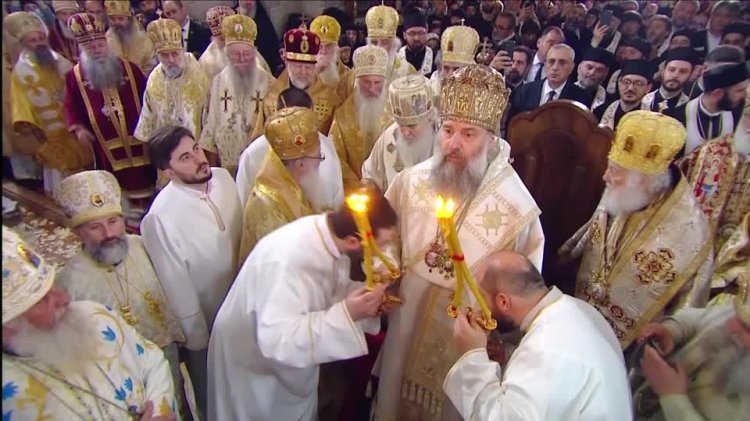
Orthodox Church leaders in Georgia have elected Shio III (born Elizbar Mujiri), 57, as the new patriarch, succeeding Ilia II after his nearly five-decade tenure. The Holy Synod of 39 senior bishops gave Shio an overwhelming mandate with 22 votes. A native of Tbilisi who studied the cello before entering the clergy and who completed theological studies at the Moscow Theological Academy, Shio has pledged unity and spiritual renewal.
His enthronement at Svetitskhoveli Cathedral in Mtskheta followed traditional Orthodox rites and drew thousands of worshippers, clergy, political figures and foreign religious delegations. The ceremony included a solemn liturgy, choral chants, processions, and the formal vesting of patriarchal symbols; public screens and tight security accommodated large crowds. In his first address as patriarch he emphasized preserving Christian values, protecting Georgia’s religious heritage and promoting peace and social solidarity amid regional instability.
The transfer of leadership occurs in a country where the Georgian Orthodox Church remains highly influential: a 2017 Pew study found roughly 89% of the population identify as Orthodox. Ilia II had shepherded the church’s post‑Soviet revival, transforming it into Georgia’s most powerful non‑state institution. Analysts say Shio inherits both symbolic authority and practical challenges, including generational change within the faithful, debates over modernization, interfaith relations, and geopolitical pressures in the South Caucasus. The choice and ceremony in Mtskheta—an ancient spiritual center and UNESCO‑listed site—underscored the church’s central role in national identity and public life, and prompted widespread domestic and international messages of congratulations.