

Los Angeles protests erupt over immigration policies
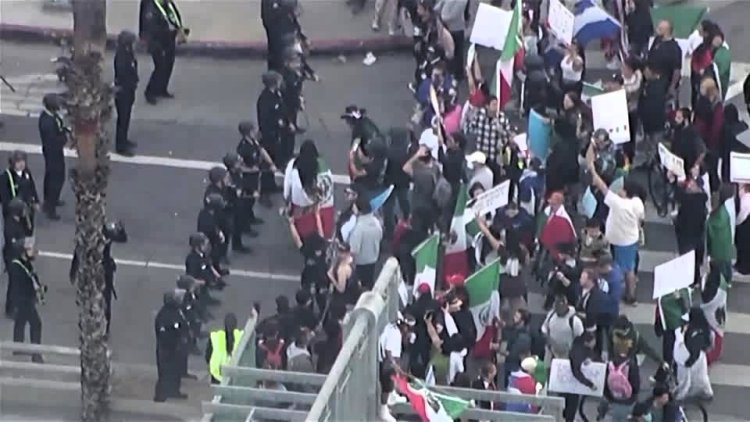
Thousands of demonstrators gathered in Los Angeles, protesting against President Trump's immigration policies and recent deportations. The protests, part of a coordinated series of actions called "A Day Without Immigrants," spread across multiple locations including downtown LA, Santa Ana, and North Hollywood.
The largest demonstration began at LA City Hall before moving through downtown streets. Approximately 1,000 protesters assembled on the Spring and Main street overpasses above the 101 Freeway, waving flags and displaying signs while police prevented highway access. In Santa Ana, around 150 residents gathered near federal buildings, carrying signs with messages like "Mexicans Aren't Going Anywhere" and "Don't Bite the Hands that Feed You."
The protests followed Sunday's larger demonstration where thousands of protesters temporarily blocked the 101 Freeway near the Alameda Street exit, causing major traffic disruptions in downtown Los Angeles, particularly around the Crypto.com Arena where the Grammy Awards were being held. Some instances of vandalism were reported, including graffiti on freeway walls and damage to a stopped vehicle.
Trump's recent executive actions have redirected military resources to support increased deportation efforts and expanded immigration officers' authority to make arrests in locations including schools, churches, and hospitals. These measures have faced strong opposition from civil and immigrant rights groups.
Local organizers Tonali Un and Carla Valencia expressed their intention to make these demonstrations regular events, noting growing dissatisfaction among former Trump supporters who they claim did not expect such aggressive immigration policies. The California Highway Patrol issued a statement warning against protesting on highways, citing safety concerns for protesters, motorists, and first responders.
The protests reflect mounting tension over Trump's immigration enforcement policies since his January 20 inauguration.