Protests hit CDC vaccine panel meeting
Demonstrators warn changes could endanger infant care
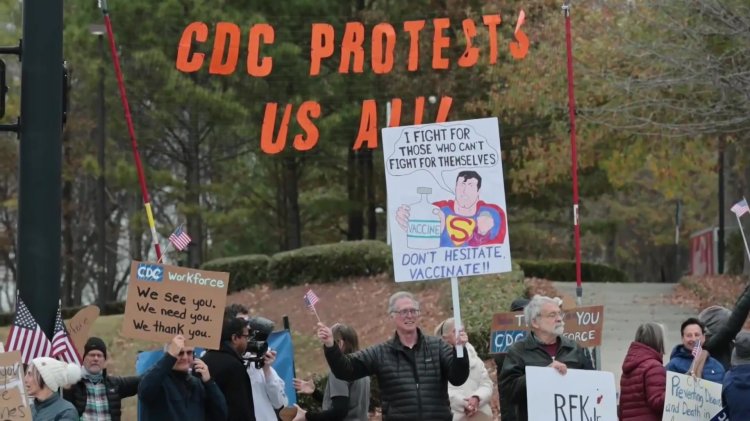
Dozens of protesters, including current and former CDC staff and public‑health advocates, rallied outside the Centers for Disease Control and Prevention’s Atlanta campus as the Advisory Committee on Immunization Practices (ACIP) met to debate proposed changes to the nation’s infant hepatitis B vaccination guidance. The demonstrations reflected broad concern that a recent overhaul of the agency’s vaccine‑advisory panel—announced earlier this year when Health and Human Services Secretary Robert F. Kennedy Jr. dismissed the previous 17‑member committee and appointed new members, some publicly skeptical of established vaccination practices—has politicized immunization policy and threatened long‑standing, evidence‑based recommendations.
At the center of the meeting was a proposal to move away from the universal recommendation that medically stable newborns receive a hepatitis B dose within 24 hours of birth. The newly constituted ACIP considered instead offering the birth dose only to infants born to mothers known to be infected, and allowing an “individual‑based decision” to delay vaccination for others until around two months of age. Presentations from recently hired, high‑profile critics of routine childhood vaccination fueled heated exchanges; defenders of the current schedule, including senior pediatricians and liaison representatives from major medical societies, reiterated that decades of data show the birth dose sharply reduces childhood hepatitis B incidence and that there is no new evidence demonstrating harm from the existing three‑dose series.
Proceedings were disrupted by confusion over rapidly revised proposal language. Committee members repeatedly warned they were being asked to vote on a “moving target,” prompting a procedural vote to postpone the decision so members could review clarified motions. The panel approved a delay by a 7–3 margin; multiple distinct motions remained under consideration, including one to reaffirm the birth dose when a mother’s hepatitis B status is unknown—a safeguard officials say is vital because a significant share of pregnant women lack prenatal screening.
Public‑health experts outside the meeting argued that revising the universal birth‑dose policy risks reversing a major public‑health success and could increase preventable infections, chronic liver disease and deaths; modeling cited by opponents suggested potential substantial harms if the first dose is routinely deferred. Medical organizations, notably the American Academy of Pediatrics, signaled continued support for the longstanding CDC schedule and warned that any erosion of clear, consistent guidance could deepen parental confusion and strengthen vaccine hesitancy already linked to recent outbreaks.