Russia, Belarus launch Zapad-2025 drills
NATO wary as exercises showcase missile systems near borders
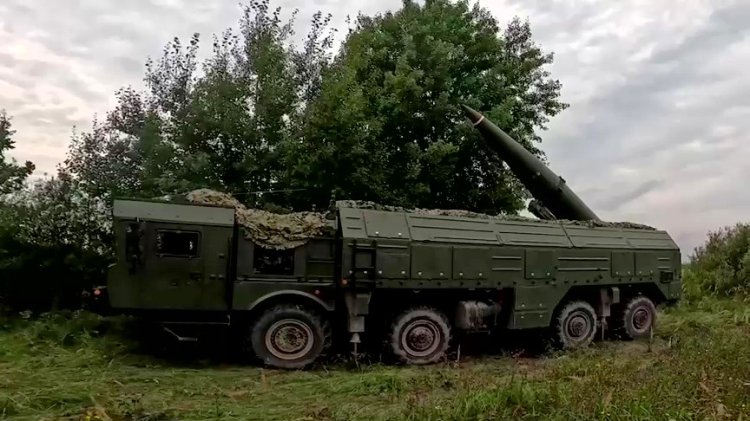
Russia and Belarus have commenced their joint military exercises, "Zapad-2025," amid rising tensions with NATO countries. The drills, taking place in Belarus and parts of Russia, including the Kaliningrad exclave, are described by Belarusian officials as defensive, aimed at enhancing the readiness of the Union State's armed forces against external threats. Officially, around 13,000 personnel are participating, although analysts suggest the actual number may be higher due to additional deployments.
A significant aspect of the exercises is the deployment of the Oreshnik missile system, which can carry both conventional and nuclear warheads. The drills include command training, simulated air defense operations, and joint exercises to improve coordination between Russian and Belarusian forces. The proximity of these exercises to NATO borders, particularly near Poland and the Baltic states, has raised security concerns, prompting Poland to restrict border crossings with Belarus and Lithuania and Latvia to impose airspace restrictions.
Despite assurances from Russian and Belarusian officials that the exercises are not aimed at any third country, NATO remains vigilant. The drills are the first since Russia's full-scale invasion of Ukraine and are viewed as a test of military readiness under wartime conditions. The Russian Defense Ministry has showcased the Iskander-M ballistic missile system during the exercises, emphasizing its capability to target critical infrastructure in Eastern Europe.
The presence of U.S. military officers at the exercises has been noted, with Belarusian officials offering transparency and access to the drills. This visit is seen as a sign of warming relations between the U.S. and Belarus, which has historically aligned with Russia. Recent diplomatic efforts have included discussions on prisoner releases and potential sanctions relief for Belarus's national airline.
As the exercises unfold, the visibility of Russian military capabilities in Kaliningrad continues to heighten security concerns among NATO members, with calls for enhanced missile defense and a stronger alliance presence in the region. The situation underscores the ongoing tensions and the complex security landscape in Eastern Europe.