Swiss village buried by glacier collapse
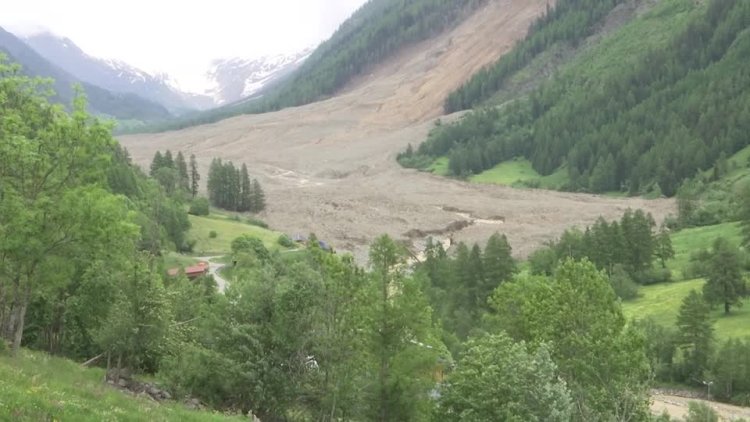
Rescue teams resumed their search in the Swiss Alpine village of Blatten for a missing 64-year-old man after a catastrophic glacier collapse buried most of the settlement under millions of cubic meters of ice, mud, and rock. The disaster, which occurred on May 28 after the Birch Glacier’s destabilization, plunged approximately 90% of the village into devastation and also blocked the Lonza River, creating a natural dam and a hazardous lake that threatens downstream communities.
The collapse, registering as a magnitude 3.1 seismic event, forced the evacuation of all 300 residents well before the landslide. Initial search efforts involved dogs and thermal drones, but rescuers had to suspend operations due to the instability of the debris mounds and the risk of further rockfalls. Local police have now demarcated a safer area after careful analysis, allowing search teams to continue their mission.
This unfolding crisis is seen as another stark illustration of the impacts of climate change, with experts linking the glacier's collapse to rising temperatures and accelerated glacier retreat. The disaster has rallied both national and international support, with a local charity, the Chain of Happiness, raising over 6 million Swiss francs in just five days to aid residents in relocating and rebuilding.
Swiss President Karin Keller-Sutter has pledged government assistance and stressed the need for national solidarity as authorities monitor the evolving risk posed by the natural dam and lake. Discussions about the future of Blatten and adaptive strategies for living in a changing Alpine environment have now begun against the backdrop of this devastating event.
While the fate of the missing man remains uncertain, rescue operations continue amid great caution as officials balance the urgent need to locate him against the ongoing dangers in the debris field. The tragedy of Blatten serves as a somber reminder of humanity’s vulnerability to nature’s unpredictable forces, already reshaping life in the high Alps.