

U.S.-Philippine forces conduct HIMARS drills
Joint exercises boost readiness and regional coordination
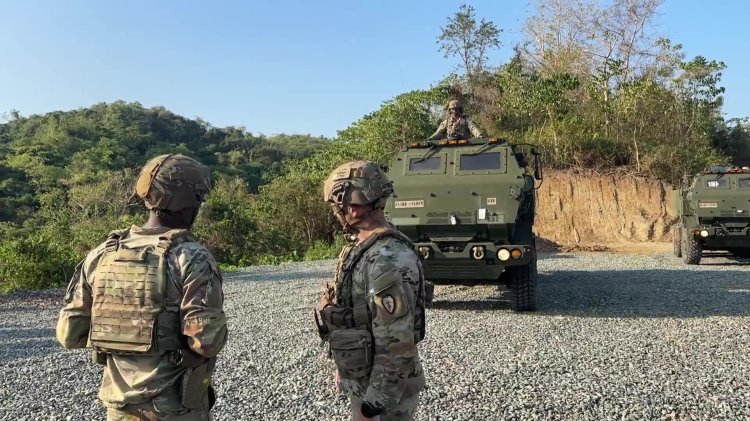
U.S. and Philippine forces fired HIMARS rockets in a joint live‑fire exercise at a military base in Laur, Nueva Ecija, as part of the multinational Salaknib drills designed to boost combat readiness and interoperability. The activity, which involved personnel from Japan, Australia and New Zealand, aimed to sharpen coordinated strike capability, rapid deployment and tactical communications across allied units amid rising regional tensions in the South China Sea.
Philippine and U.S. commanders said the drills tested combined arms procedures and command-and-control integration, while also rehearsing disaster‑response tasks such as search‑and‑rescue and logistical support—reflecting the Philippines’ exposure to natural disasters. The use of High Mobility Artillery Rocket Systems underscored a focus on longer‑range precision fires and joint targeting practices intended to improve deterrence and response options for contingencies.
Officials highlighted the exercises as a reinforcement of the long‑standing U.S.–Philippine defence partnership and noted routine U.S. access to Philippine bases under their mutual defence arrangements. Participating partner nations described the drills as part of broader efforts to enhance regional cooperation, share best practices and strengthen collective readiness in the face of evolving security challenges.
Observers said the scale and multinational composition of Salaknib signal sustained emphasis on allied interoperability in the Indo‑Pacific, while also serving as a demonstration of combined capabilities to reassure partners and deter potential adversaries. Further training phases are planned, with militaries set to evaluate lessons learned and refine coordination across land, air and maritime domains.