Italy strike erupts over Gaza conflict
Protests halt services as clashes erupt with police
A nationwide general strike erupted across Italy, sparked by grassroots unions demanding an immediate severance of ties with Israel over the ongoing Gaza conflict. The strike, which began at midnight, halted public transport, railways, schools, ports and other services in more than 75 municipalities, affecting cities such as Genoa, Livorno, Milan, Rome, Bologna, Turin, Naples and Venice.
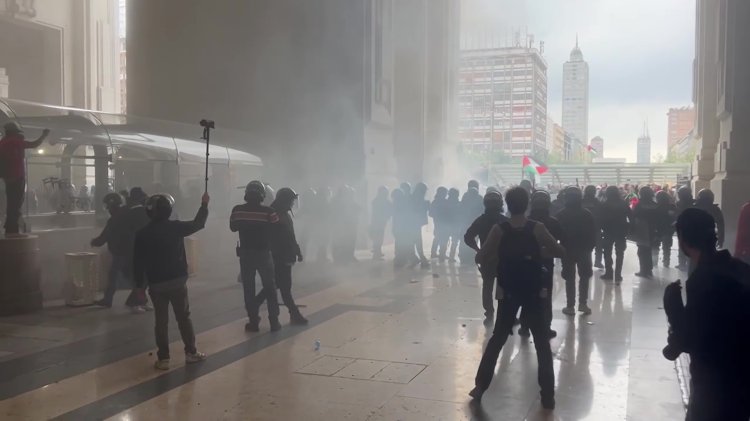
In Milan, the protest turned violent when dozens of demonstrators in black, armed with sticks, tried to breach the central train station. Smoke bombs, bottles and stones were thrown at police, who responded with pepper spray and other crowd‑control measures. Around 60 officers suffered injuries and at least ten protesters were arrested. Similar clashes occurred in Bologna, where water cannons were used, and in other cities where dock workers blocked ports, citing concerns that Italy was being used as a staging point for arms shipments to Israel.
The USB union called for “the immediate break‑off of relations with the terrorist state of Israel” as the concrete way Italy could react to what it described as genocide in Gaza, where nearly 65,300 Palestinians have been killed since October 2023. Demonstrators carried Palestinian flags, chanted “free Palestine,” and voiced support for the Global Sumud Flotilla, an initiative of small boats attempting to break Israel’s naval blockade.
Prime Minister Giorgia Meloni condemned the violence, labeling it “shameful” and “counterproductive,” while maintaining a cautious stance on the war and refusing to recognise a Palestinian state, unlike France, the UK, Canada and Australia, which have moved toward recognition at the UN. Transport minister Matteo Salvini downplayed the impact, describing the protests as a “political mobilisation of far‑left unionists.”
The strike highlighted deep societal divisions in Italy over the country’s foreign policy and its perceived complicity in the Gaza war. While many Italians expressed solidarity with Palestinians and demanded a stronger governmental response, the government faced criticism for both its restrained diplomatic posture and its handling of the police‑protester confrontations. The events represent one of the most extensive waves of unrest in Italy since the conflict began, underscoring the growing domestic pressure to address the humanitarian crisis in Gaza.