

Kim urges loyalty ahead of party anniversary
North Korea plans major parade as ties with China and Russia deepen
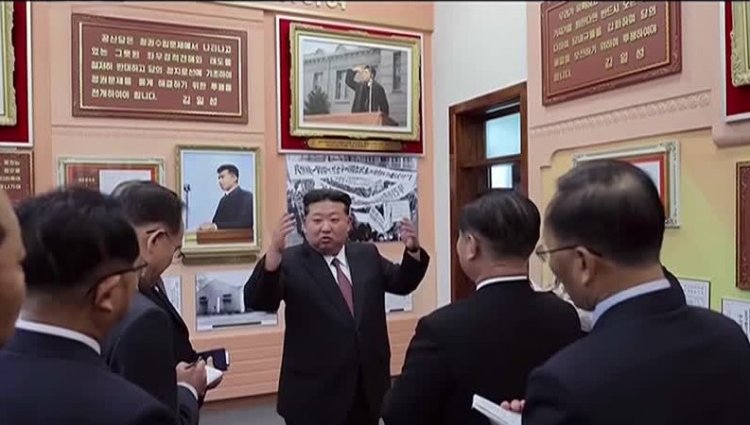
North Korean leader Kim Jong Un delivered a high-profile speech during a visit to the Party Founding Museum in Pyongyang, praising the legacy of the Workers’ Party and urging renewed loyalty to socialism. State media described the address as “significant,” saying Kim honored his grandfather Kim Il Sung and anti-Japanese fighters for laying a “solid cornerstone” that ensured the party’s enduring strength. He framed the museum as a “sacred sanctuary” preserving the party’s revolutionary continuity and warned against ideological decay, urging officials and the younger generation to maintain discipline, unity and self-reliance under the party line.
The speech comes as Pyongyang prepares state festivities for the 80th anniversary of the Workers’ Party. Foreign delegations expected to attend include Chinese Premier Li Qiang, a Russian delegation led by Dmitry Medvedev, and Vietnam’s Communist Party chief To Lam—high-profile guests that signal strengthened ties with Beijing and Moscow following recent diplomatic engagements. Analysts say Kim’s recent trip to China, where he stood alongside senior leaders, reinforced strategic relations and emboldened his pursuit of expanded missile and nuclear capabilities.
Observers and South Korean officials report signs that North Korea is preparing a major military parade in Pyongyang to mark the anniversary. Satellite imagery and rehearsal activity around Mirim Airport have fueled expectations of a large-scale, possibly nighttime parade with tens of thousands of participants and mass gymnastics performances—hallmarks of North Korean state pageantry. Military analysts are closely watching which systems Pyongyang will display; speculation centers on next-generation assets such as a potential Hwasong-20 intercontinental ballistic missile, hypersonic glide vehicles like the Hwasong-11 Ma, and other advanced weapons that would demonstrate progress in long-range strike and maneuverable reentry technologies.
The anniversary serves multiple domestic and international purposes for the regime. Domestically, choreographed rallies, museum symbolism and tightly managed messaging reinforce regime legitimacy, ideological cohesion and generational continuity of the Kim dynasty. Internationally, the event offers a platform to project military capability and diplomatic backing from allied states amidst heavy sanctions and geopolitical isolation. Pyongyang’s visible warming with Russia—highlighted by a mutual defense pact and reported transfers of personnel, missiles and munitions to support Moscow’s operations—adds a layer of geopolitical signaling to the celebrations.