Resident doctors protest low wages in Buenos Aires
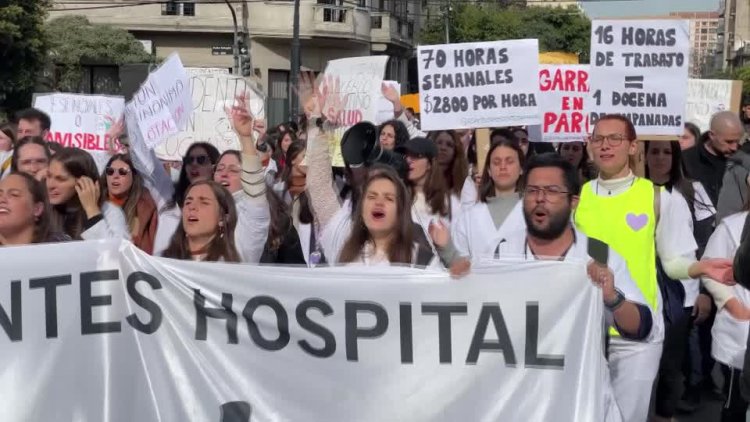
Resident doctors in Buenos Aires staged a protest, demanding better wages and working conditions as they marched towards the Health Ministry, guarded by police. The demonstration highlighted the struggles of first-year residents, who earn approximately $673 per month while working 60 to 70 hours a week. Candela Mondaca, a 28-year-old resident at Garrahan Hospital, voiced concerns over the inadequate compensation for their demanding schedules.
Presidential spokesperson Manuel Adorni responded to the protests, claiming that Garrahan Hospital was not underfunded but rather that funds were being used to inflate staff numbers. This protest is part of a broader wave of demonstrations by medical workers in Argentina, which have intensified following budget cuts initiated under President Javier Milei's administration.
The protests reflect the growing dissatisfaction among resident doctors and healthcare workers amid Argentina's escalating economic crisis, characterized by soaring inflation rates exceeding 210% by the end of 2023. Many resident doctors report earning around 120,000 pesos per month (approximately $700 at the official exchange rate), which has become increasingly untenable given the country's economic conditions.
The unrest is not limited to resident doctors; a nationwide strike on February 22, 2024, saw around 500,000 healthcare workers, including nurses and support staff, participating in a coordinated effort to demand wage increases and improved working conditions. Organized by the Federation of Argentine Health Workers Associations (FATSA), the strike aimed to pressure the government to address wage stagnation and deteriorating conditions within the healthcare sector.
Healthcare professionals have raised alarms about the dire consequences of inadequate staffing and resources, with some hospitals reportedly reducing services to emergency care only due to low salaries and high turnover rates. The ongoing protests underscore the significant challenges facing Argentina's healthcare system as economic instability continues to strain public services and the professionals who support them.