Artemis II sends crew around Moon
NASA launches first deep-space crew since Apollo
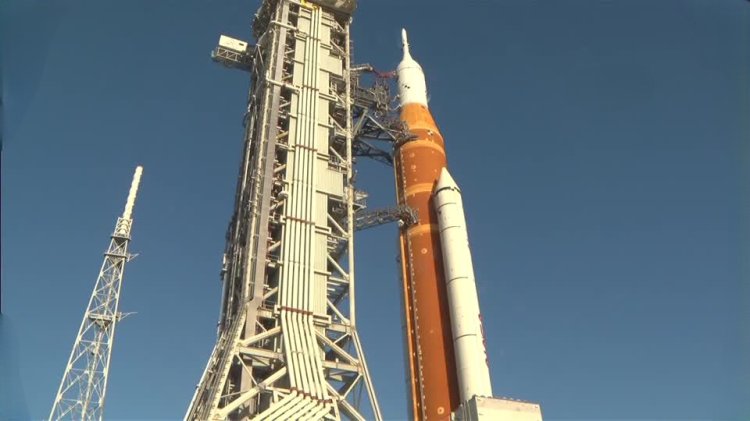
Four astronauts lifted off from Florida on NASA’s Artemis II mission, embarking on a nearly 10‑day flight around the Moon and back that marks the agency’s first crewed voyage beyond low Earth orbit since the Apollo era. The Space Launch System rocket, carrying an Orion crew capsule, launched from the Kennedy Space Center in a thunderous ascent that left a towering plume of vapor as the four-person crew—NASA astronauts Reid Wiseman, Victor Glover and Christina Koch, and Canadian Space Agency astronaut Jeremy Hansen—began a mission designed to push humans farther into space than they have gone before.
After almost three years of training, the crew will separate Orion from the SLS upper stage a few hours into the flight and manually test the capsule’s steering and maneuvering capabilities around the detached stage, completing a series of test objectives essential to validating systems for future lunar operations. Built under the Artemis program launched in 2017, the mission is an early but pivotal step in a multibillion‑dollar plan to reestablish a sustained human presence on and around the Moon and to prepare for a targeted crewed lunar landing in 2028 (Artemis IV).
The launch also represents a major milestone for SLS and its prime contractors, offering long‑sought confirmation that the 30‑story launch system can carry humans safely even as NASA increasingly complements its portfolio with commercial rockets. Orion, manufactured by Lockheed Martin, will be evaluated for navigation, life‑support and communication performance during the deep‑space excursion. Mission teams are monitoring systems closely as the flight progresses; results will inform subsequent missions and the broader goal of returning humans to the lunar surface and advancing eventual crewed exploration beyond the Moon.