China's crew cultivates rice in orbit
Groundbreaking experiment aims for self-sufficient space food production
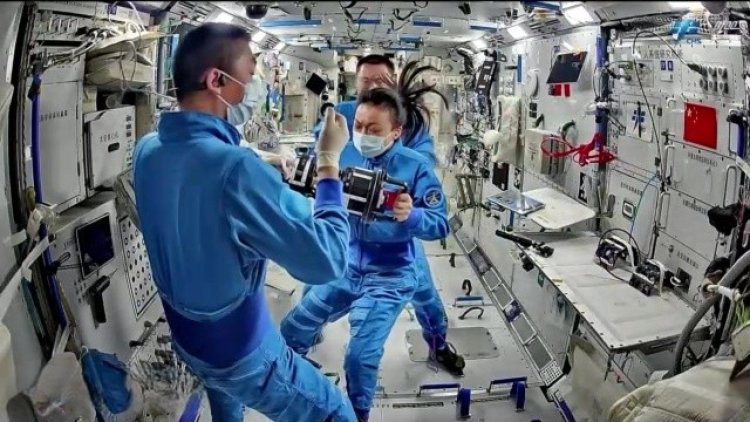
Astronauts aboard China's Tiangong space station harvested experimental rice samples. The Shenzhou-23 crew is cultivating two consecutive generations of rice in orbit, critical for self-sufficient food supply in deep-space missions. The experiment studies how microgravity influences rice genetic stability across generations, vital for reliable in-situ food production and reducing dependence on Earth-based resupply for human exploration. The Shenzhou-23 mission carried two types of Chinese japonica rice seeds: ordinary seeds and descendants of seeds harvested aboard the station in 2022. Scientists are comparing their growth to determine if 'space lineage' seeds adapt better to orbit. The experiment also explores sexual reproduction and ratoon rice cultivation. This endeavor builds upon earlier work. In 2022, the Shenzhou-14 mission successfully completed the world's first full life-cycle rice cultivation aboard Tiangong, yielding 59 first-generation space rice seeds returned to Earth. The Shenzhou-23 crew extends this research beyond a single generation to continuous, multi-generational cultivation. The crew has cultivated the plants for over two months, collecting panicles, seeds, and preserving stem and leaf samples for return to Earth. Scientists will analyze these samples to support sustainable production for future space agriculture. The experiment's success could establish humanity's ability to grow its own food far from Earth, crucial for sustained presence on the Moon, Mars, and beyond.