Greece protests military spending
Unions rally against defence budget hikes

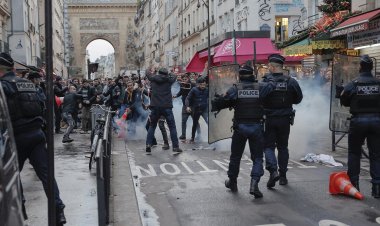
Hundreds of protesters, including members of Greece’s main civil servants’ union ADEDY and the communist-affiliated PAME labour movement, rallied in central Athens to oppose rising military spending and to demand that Greece refrain from any involvement in the war in Iran. The demonstration, centered on Syntagma Square and marching toward government and EU offices, featured anti-war chants, banners calling for funds to be redirected to social services and wages, and the burning of a European Union flag outside EU offices.
Organizers and union leaders said the mobilization was driven by concern that increased defense budgets are siphoning resources away from healthcare, education and public-sector pay at a time when inflation and living costs are eroding purchasing power. Participants included public-sector workers, major labour organizations and student groups, many pressing for better working conditions, wage increases and measures to ease the cost-of-living squeeze.
Authorities deployed police to monitor the march and secure restricted zones near government buildings; the protest was largely peaceful but saw minor tensions where demonstrators tried to approach those areas. Government spokespeople defended the rise in defence spending as necessary to modernize capabilities and address regional security challenges, saying sustained investment in the armed forces is required amid ongoing geopolitical tensions. Union leaders rejected this argument, insisting social welfare should not be sacrificed for military priorities and warning that continued emphasis on defence could deepen inequality and spark further worker unrest.
The rally is part of a broader, nationwide mobilisation against defence expenditure increases and signals a widening public debate over fiscal priorities as Greece balances economic recovery with external security concerns. Union officials have threatened additional protests and potential strikes if the government does not reverse course or channel more funds into public services and wages, suggesting labour-government tensions over budget allocation may persist.