Quad expands Indo-Pacific supply chain plans
Ministers launch minerals and port security initiatives
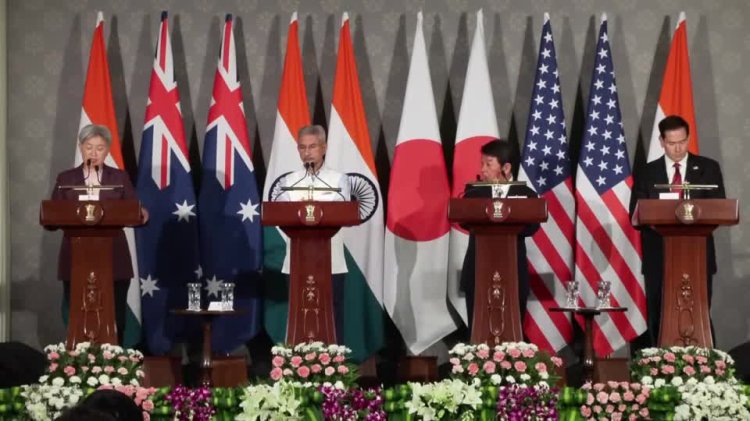
The Quad foreign ministers announced coordinated initiatives to bolster Indo-Pacific energy security and secure critical minerals supply chains, pledging joint action on mining, processing, recycling and investment to reduce dependence on concentrated sources. Officials said the critical minerals framework will guide economic-policy tools and coordinated investment across member states to map supply chains, identify vulnerabilities and expand domestic and partner capacity for minerals used in batteries, semiconductors, renewable energy and defense industries. Ministers emphasized diversified sourcing and expanded processing and recycling to support clean-energy transitions and strategic resilience.
Delegations also unveiled a “ports of the future” partnership, including a pilot project for port infrastructure in Fiji, intended to strengthen regional logistics and economic connectivity across the Pacific. Discussions additionally addressed broader connectivity choke points — from maritime routes and undersea cables to logistics corridors — with ministers stressing investments in port development, digital connectivity, redundancy for critical infrastructure, and improved capacity for rapid repairs and emergency coordination to limit disruption to trade and energy flows.
The meeting, the third ministerial-level Quad gathering since September 2024, featured Australia, India, Japan and the United States coordinating roles: resource supply and infrastructure from Australia and India, and processing, technology and financing from Japan and the U.S. Ministers framed the efforts as measures to enhance economic security and resilience rather than targeting any specific country, though analysts noted the moves occur amid intensifying geopolitical competition over strategic resources and supply chains.
Energy-security cooperation also touched on LNG, grid stability and contingency mechanisms for supply shocks, while clean-energy collaboration included hydrogen development, battery recycling technologies and renewable infrastructure investment. The ministers concluded with commitments to deepen coordination on economic-security policies, infrastructure financing and strategic resource management as global demand for critical minerals and resilient connectivity continues to rise.