Robots compete in new tug-of-war event
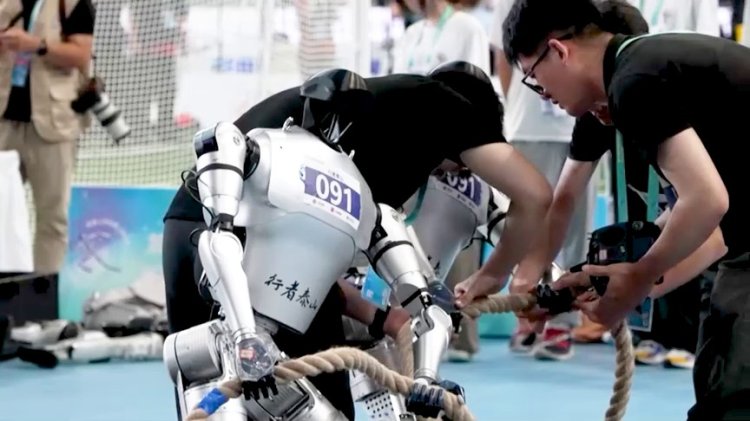
The second World Humanoid Robot Games showcase rapid advancements in robotics and artificial intelligence. This year debuts a new tug-of-war competition where humanoid robots push their limits. The event drew 2,056 robots from 666 teams, competing across 51 events.Tug-of-war requires more than brute strength. Robots need sophisticated motion control, force recognition, and dynamic coordination. Robust legs and flexible arms are essential for a firm grip. Disqualification rules, like touching the ground or moving out of bounds, add complexity.Beyond this new event, the games feature diverse competitions, including traditional sports like running and high jump. Scenario-based tasks simulate applications, evaluating robots' ability to identify objects, apply controlled force, and recover from errors.This year's games saw remarkable breakthroughs. Humanoid robots surpassed human world records in the 100-meter sprint and standing high jump. One robot completed the 100-meter dash in 9.39 seconds; another achieved a 2.88-meter standing high jump. These achievements highlight significant progress in hardware, battery output, and thermal management.However, the games also highlight ongoing challenges. While some robots perform with impressive agility, many still stumble and require human assistance, indicating hurdles before widespread deployment. Organizers view these games as crucial for global leadership in next-generation robotics, attracting public interest and investors.