Semeru eruption devastates villages
Residents flee as ash and mud bury homes and farmland
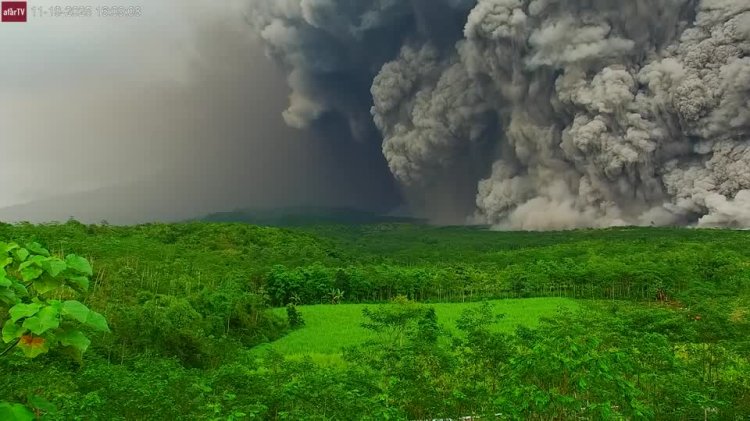
Residents near Mount Semeru in East Java are confronting extensive devastation after the volcano erupted, blanketing villages in thick ash and pyroclastic mud and prompting mass evacuations. Footage released by local disaster agency BPBD Malang shows responders moving along mud‑choked roads past damaged houses in Kamar A, a settlement located inside the mountain’s designated red zone. Authorities maintained the alert at the highest level after Semeru—one of Indonesia’s tallest and most active volcanoes—sent massive plumes of ash into the sky and propelled lava, hot ash and rock flows reaching as far as 13 km down its slopes.
Witnesses in Lumajang district described the sky darkening within minutes as ash fell relentlessly; subsequent rain transformed the ash into heavy mud that clogged streets, hampered movement and caused roofs to sag under the accumulating weight. Emergency teams evacuated hundreds of residents from high‑risk areas and rescued several climbers who had been stranded on the mountain, as crews operated in low‑visibility conditions and unstable terrain. Authorities warned people to stay well clear of river channels that can carry lahars—fast, destructive mixtures of volcanic material and water capable of surging without warning.
The eruption inflicted damage on homes, infrastructure and agricultural land, raising immediate concerns about crop losses and the prospects for longer‑term recovery for affected communities. Power interruptions were reported in some areas, complicating response efforts and daily life. Officials advised residents to wear masks to reduce inhalation of fine volcanic ash particles, which can cause respiratory problems, and urged those displaced to seek shelter in designated safe zones.
Rescue and assessment operations are ongoing as authorities continue to monitor seismic and volcanic activity around Semeru. Disaster management teams are conducting damage surveys to determine immediate needs and coordinate relief, with plans to provide support to displaced families and restore essential services where possible. Officials emphasized that the situation remains fluid and that further eruptions or mudflows cannot be ruled out, underscoring the need for vigilance and adherence to exclusion zones.
Mount Semeru’s renewed activity highlights the recurring risks faced by communities along the Pacific “Ring of Fire,” where frequent seismic and volcanic events threaten lives, property and livelihoods. The eruption serves as a reminder of the challenges in preparing for and responding to sudden volcanic disasters in densely populated regions, and the importance of continued monitoring, early warning systems and coordinated emergency response to reduce harm and speed recovery.