

Brazil landslide kills at least 25
Heavy rains bury homes in Minas Gerais leaving dozens missing
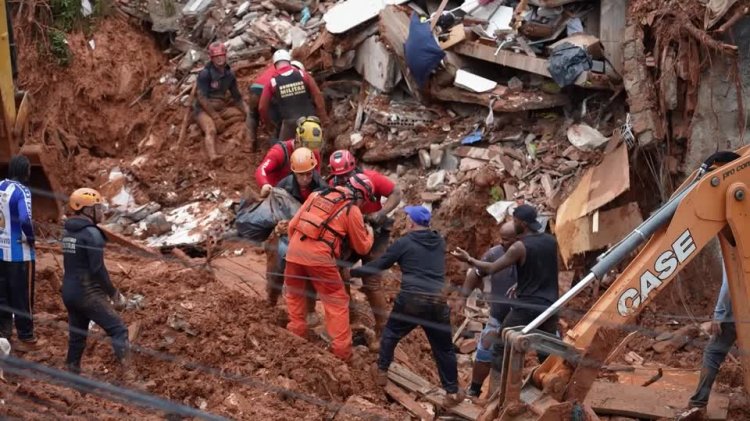
Rescue teams recovered bodies from debris and thick mud after a landslide triggered by heavy rains struck a residential area in southeastern Brazil, officials said. Saturated hillsides collapsed, sending mud and rubble into homes, blocking roads and complicating search efforts. Firefighters, civil defense units and sniffer dogs worked alongside heavy machinery to reach buried victims while specialized teams conducted careful searches to avoid further collapses.
Authorities confirmed multiple fatalities concentrated in Juiz de Fora, where at least 18 deaths were reported and about 440 people displaced. Additional fatalities were reported in Uba, roughly 110 km away, bringing the broader toll in Minas Gerais state to at least 25 dead; 43 people remain missing. Officials cautioned that figures may change as identification and rescue operations continue.
Rescuers described challenging conditions across a wide area that includes some 12 residences directly affected in the hardest-hit neighborhood. Residents recounted hearing a loud rumble as the hillside gave way; some escaped, but many were trapped inside their homes when the mudflow swept through. Emergency shelters were established in schools and community centers to provide temporary housing, food and medical assistance to displaced families.
Local authorities attributed the disaster to days of intense rainfall during the region’s peak rainy season, which overwhelmed drainage systems and heightened slope instability. Meteorological alerts had warned of potential flooding and landslides in mountainous and densely populated zones. Engineers and geologists have begun assessing structural safety in surrounding areas to decide whether further evacuations are necessary.
Officials declared a state of calamity in Juiz de Fora to mobilize resources for recovery. The episode has renewed calls from experts and community leaders for improved urban planning, stronger early-warning systems and long-term investment in slope-stabilization measures—particularly in areas where informal housing has expanded onto steep hillsides—aimed at reducing vulnerability to future rain-triggered disasters.