

Cologne protest met with police crackdown
Hundreds injured and detained as peace march faces repression
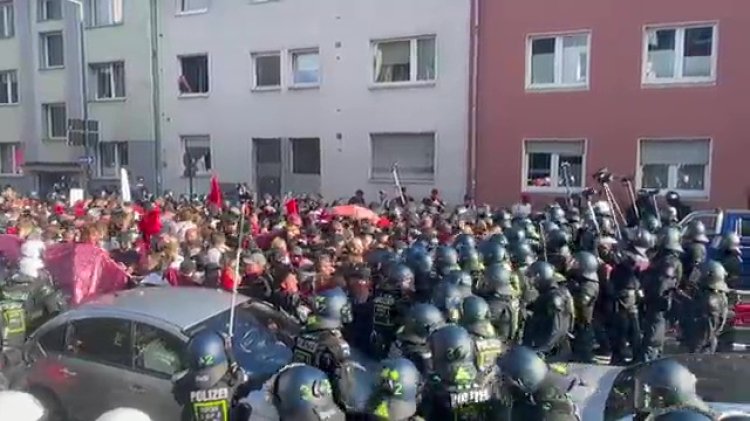
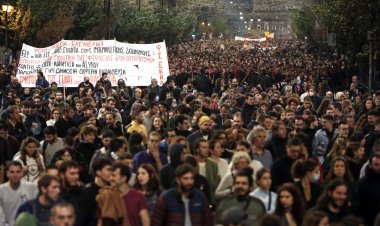
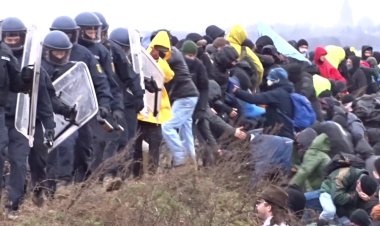
In Cologne, Germany, thousands of demonstrators marched for peace and against militarization, primarily composed of teenagers and young adults affiliated with the “Disarm Rheinmetall” movement. The protest, organized by the Cologne Peace Forum, faced a heavy police response, resulting in significant repression, including mass kettling, assaults, and arrests. Approximately 100 protesters were injured due to police brutality, with 800 charged with serious breaches of peace, and three individuals detained overnight.
The demonstration was met with an aggressive police presence, deploying around 1,600 officers in riot gear, along with armored vehicles and water cannons. Protesters were kettled for nearly 11 hours, and authorities blocked the march's start using various pretexts, including alleged violations of face-covering bans and the presence of prohibited metal items. The police cited supposed attacks on officers and violations of assembly rules as reasons for escalating their response, ultimately halting the demonstration halfway through its intended route.
During the crackdown, police used physical force and pepper spray to disperse a group of several hundred protesters, leading to numerous injuries. Medical volunteers treated at least 147 individuals for various issues, including exposure to pepper spray and internal injuries. Additionally, police detained and processed personal details from around 524 individuals, with reports of serious injuries, including a potentially life-threatening injury to a protester’s larynx.
The police actions drew condemnation from civil groups, who criticized the extreme measures taken against a peaceful and educational event that had received prior court approval. Observers, including journalists and a parliamentary representative from the Left Party, faced harassment and detention while attempting to monitor the situation. This crackdown represents a significant escalation in the state’s response to anti-war and anti-militarization protests in Germany, raising serious concerns about assembly rights and the treatment of peaceful demonstrators.