

Hungarians protest state propaganda
Demonstrators in Budapest demand oversight of government ads
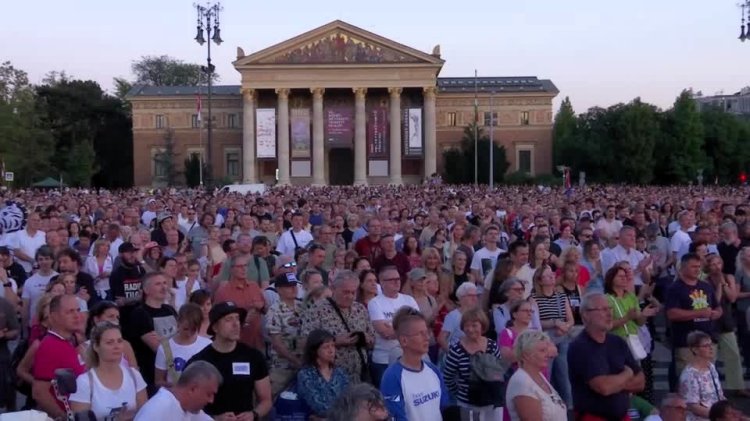
Thousands gathered in Budapest’s Heroes’ Square to denounce state‑funded political advertising that they describe as propaganda, hate speech and fear‑mongering. The demonstration, organized by the Loupe Theatre Troupe and other civil‑society groups, claimed tens of thousands of participants and called for an end to government-sponsored information campaigns that target opponents and critics of Prime Minister Viktor Orbán.
Protesters pointed to a series of billboards that vilify EU Commission President Ursula von der Leyen, Alex Soros and other figures, arguing the messages are offensive and harmful to families.
Demonstrators warned that the climate of hatred would worsen until the next election cycle, urging action against what they called “ inhuman” rhetoric.
A zebra‑costumed protester became a visual symbol after a striped animal was spotted near an Orbán family home, reinforcing the claim that the government’s narrative portrays Hungary as morally superior to a decaying West. Orbán, a eurosceptic nationalist facing a potentially difficult 2026 election, has repeatedly framed foreign nations as morally declining while positioning Hungary as a bastion of traditional values.
The government defended the campaigns as factual public‑awareness efforts, insisting they are legal, necessary for informing citizens about policy changes, social programmes and security concerns. Officials stressed that freedom of expression must be balanced with public order, and warned that any disruptions would be dealt with according to law.
The protest reflects wider anxieties about media control in Hungary. Critics argue that state‑funded messaging reinforces the ruling Fidesz party’s narrative, marginalises dissent and labels opposition as unpatriotic. Opposition leaders claim the adverts aim to sway public opinion ahead of upcoming elections and erode trust in institutions. Demonstrators called for transparent regulations, independent oversight of state media and clear labeling of government‑financed advertising.
Police monitored the crowd but reported no major clashes. The event underscores a growing clash between a government that sees state‑sponsored communication as a legitimate tool for civic education and a segment of the population that views it as manipulative propaganda threatening democratic discourse.