

Hungary opposition claims landslide win
Péter Magyar poised to unseat Viktor Orbán after 16 years
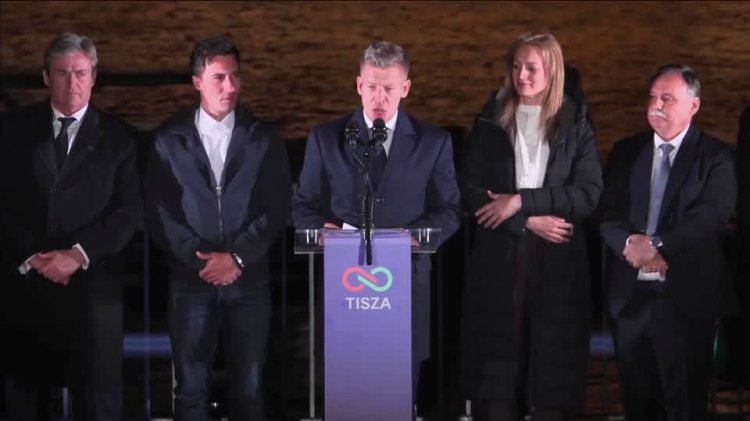
Tens of thousands gathered along the Danube in Budapest as opposition leader Péter Magyar and his Tisza party claimed a historic landslide, projected to win a two‑thirds supermajority in the 199‑seat parliament and unseat Viktor Orbán after 16 years. Jubilant supporters waved flags, carried torches and celebrated late into the night as Magyar moved through the crowds, calling the result a turning point and pledging to outline his priorities soon.
Early counts showed the centre‑right, pro‑EU Tisza party securing roughly 135–137 seats with turnout reported at around 77–79%, markedly higher than four years earlier. Exit figures and partial tallies indicated Tisza’s decisive lead over Orbán’s Fidesz, which conceded the situation was “painful but clear.” Observers described the vote as orderly but noted longstanding opposition concerns about media access and institutional advantages enjoyed by the ruling party during the campaign.
The outcome would end Orbán’s long tenure and could reshape Hungary’s domestic and foreign policy: a pivot away from the adversarial stance toward the EU, potential unblocking of suspended EU funds, and renewed openness to measures such as large-scale financial support for Ukraine that had been obstructed. The upgraded mandate would allow Magyar’s government to enact major legislative changes without coalition constraints, affecting governance, rule‑of‑law issues and Hungary’s role in Europe.
Beyond immediate political change, analysts say the election highlights heightened civic engagement and a mobilized opposition capable of overcoming entrenched incumbency. As celebrations continued, attention turned to formal certification of results and to Magyar’s forthcoming policy agenda and appointments, which will determine how rapidly and extensively the political landscape shifts.