Kenya hosts Africa-France summit
Ruto and Macron push stronger economic ties
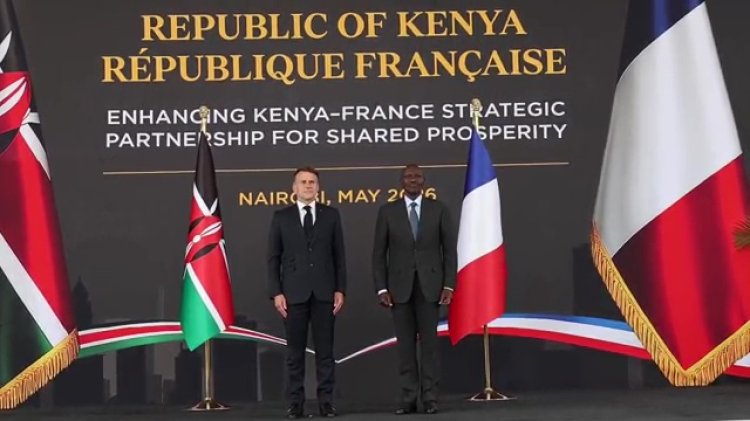
Kenya hosted a high‑profile meeting between President William Ruto and French President Emmanuel Macron on the eve of the Africa–France summit in Nairobi, marking a diplomatic shift as the summit is held outside France and francophone Africa for the first time. The leaders outlined intentions to deepen economic and political ties, with talks focused on trade, investment, climate action and security cooperation as Paris seeks to recalibrate relations across the continent amid evolving geopolitical competition.
Macron stressed France’s emphasis on freedom of navigation when asked about any military deployments related to the Strait of Hormuz, denying plans for French or Franco‑British forces while saying France remains “standing by.” Kenyan officials described the summit as an opportunity to build diversified partnerships beyond security‑centric models, with Nairobi positioning itself as a hub for renewed engagement between African states and European partners. Billboards across the capital promoted a “renewed partnership,” underscoring Kenya’s role as host and continental interlocutor.
Analysts view the gathering as part of a broader French strategy to move away from the faltering security approach that fueled anti‑French sentiment in parts of West Africa, replacing it with a focus on investment, infrastructure and economic cooperation. Kenyan leaders urged realistic expectations about immediate outcomes while calling for long‑term commitments on projects such as renewable energy, trade facilitation and industrial development. Both sides highlighted climate finance and support for adaptation as priorities, noting Africa’s disproportionate vulnerability to climate change.
Security cooperation also featured in discussions, with attention on counterterrorism, maritime security and regional stability in the Horn of Africa and Sahel, though Macron reiterated no new troop deployments are planned. The summit is expected to convene African leaders, business executives and policymakers to translate diplomatic signals into concrete partnerships and investment pledges. Observers say success will depend on tangible follow‑through that addresses economic needs, respects African leadership priorities and rebuilds trust after years of uneven relations.