

Pope Leo begins Ankara visit with calls for peace
Pontiff urges cooperation and vows support for vulnerable communities
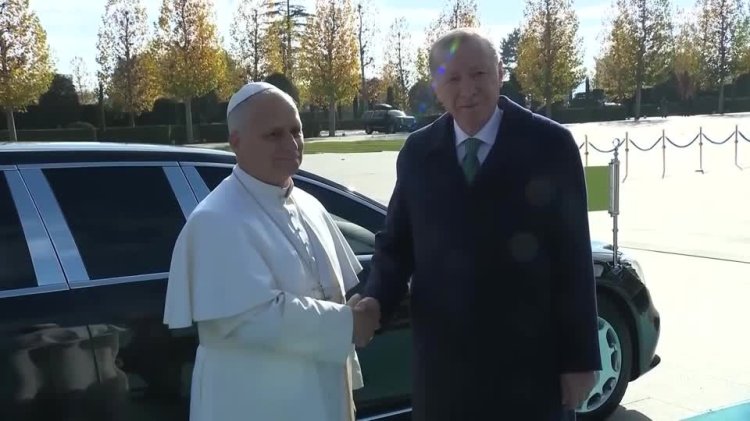
Pope Leo began his first trip outside Italy with a full day of engagements in Ankara, where Turkish officials welcomed him, he visited the mausoleum of modern Turkey’s founder Mustafa Kemal Atatürk, and he held talks with President Tayyip Erdoğan. The pontiff laid a wreath at Atatürk’s tomb, signed a memorial book and took part in an official ceremony at the presidential palace.
Speaking at the presidency’s library, he warned of a “heightened level of conflict” worldwide and urged renewed international cooperation to pursue peace, combat hunger and poverty, protect creation and shelter refugees. He described current tensions as feeding global mistrust and humanitarian crises and called for diplomacy, respect for human dignity and protection for vulnerable populations.
In meetings with Erdoğan and other officials, the pope highlighted Turkey’s role as a bridge between continents and cultures and encouraged Ankara to foster dialogue amid regional instability. He also met representatives of Turkey’s Christian communities—including Latin Catholics, Syriac Christians and members of the Armenian Apostolic Church—stressing religious coexistence and thanking authorities for allowing space to practise faith while quietly urging expanded protections for minority religious groups.
Later in the day he visited a memorial for victims of political violence, laying a wreath and praying silently in a gesture Vatican officials said honoured civilians affected by conflict regardless of nationality or religion. Crowds gathered at key locations in Ankara, waving Vatican and Turkish flags; security was tight with road closures and checkpoints around the presidential complex, but the atmosphere remained largely calm.
The visit is the first leg of a broader eastern Mediterranean tour that will also take the pope to Istanbul, İznik and Lebanon. Observers say the itinerary underscores his early papacy focus on peacebuilding, interfaith dialogue and regional stability, with upcoming stops expected to emphasize Christian unity and ecumenical engagement, including a symbolic connection to the 1,700th anniversary of the First Council of Nicaea.