

Progress MS-33 heads to ISS after launch
Cargo craft carries supplies and equipment for crew
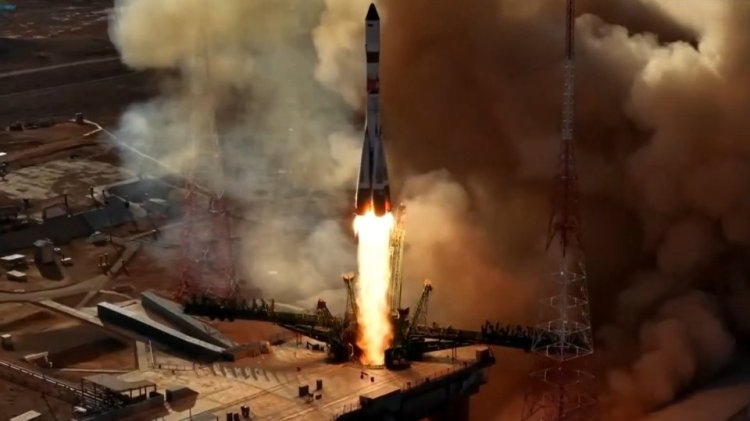
Russia’s Progress MS-33 cargo spacecraft separated successfully from the Soyuz-2.1a third stage after liftoff from Baikonur Cosmodrome, Roscosmos said, and is en route to the International Space Station on a planned 49.5‑hour rendezvous. The roughly 7.4‑ton automated vehicle was inserted into orbit shortly after launch and is scheduled to dock with the Poisk module of the Russian segment on March 24 at 16:35 Moscow time.
The mission will deliver 2,509 kg of supplies, including 1,211 kg of dry cargo for the ISS‑74 crew and station systems—among it equipment for the Sun‑Terahertz experiment—828 kg of propellant for station refueling, 420 liters of drinking water and 50 kg of oxygen to replenish the station atmosphere. Progress MS vehicles routinely carry food, scientific hardware, spare parts, and consumables, and later serve to remove waste before destructive re‑entry.
Roscosmos reported a nominal ascent and orbital insertion with all systems functioning as expected. The flight continues a regular resupply cadence that sustains long‑duration human presence aboard the ISS and supports ongoing experiments across international partner modules. Observers note that, despite geopolitical tensions on Earth, operational cooperation and logistics for the ISS remain largely intact, with automated Russian cargo runs continuing to play a central role in station maintenance and research support.
Following automated approach and docking procedures, crew and ground teams will offload the delivered equipment, fuel and life‑support stores and integrate experimental payloads such as the Sun‑Terahertz hardware. The Progress MS series remains a workhorse for station logistics, combining resupply and waste disposal functions and underpinning the ISS’s scientific and human‑spaceflight operations.