Palestinians launch major cleanup in Gaza
Volunteers and agencies are removing rubble to begin early recovery and reconstruction
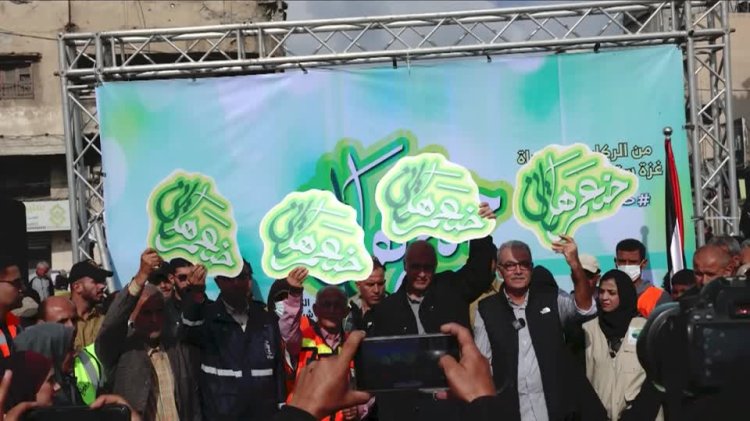
Palestinians, supported by local organisations and U.N. agencies, launched a large-scale cleanup and early recovery campaign in Gaza City aimed at removing the vast quantities of rubble left by two years of conflict and signalling the start of reconstruction. Organisers say the effort targets some 60 million tonnes of debris from destroyed homes, public facilities and infrastructure. Dozens of volunteers, U.N. staff and residents took part in a high-profile ceremony in the city centre, using shovels and heavy machinery to clear streets while trucks hauled away rubble; young trees were planted in open spaces as a symbolic gesture of renewal.
The initiative, branded “We Will Rebuild” and backed by UNDP and other agencies, focuses on immediate, practical tasks—clearing pathways, collecting collapsed-building debris and restoring public areas—to restore a degree of normalcy for families returning from displacement and to lay groundwork for broader reconstruction. Organisers stressed the civic and psychological importance of resident participation, highlighting that many volunteers had only recently come back from shelters. Local NGOs said the campaign is intended to revive community cohesion and dignity while demonstrating that grassroots recovery can begin even amid massive destruction.
The cleanup comes amid a fragile political and security backdrop following a U.S.-brokered ceasefire that halted two years of war triggered by the October 2023 attacks. Under the current phased plan, Israeli forces retain control of large parts of Gaza, including much farmland and urban areas, while the proposed next stage foresees further Israeli withdrawal, establishment of a transitional authority, deployment of a multinational security force, disarmament of Hamas and the start of reconstruction—measures that remain contested and without clear timelines or enforcement mechanisms. Hamas refuses to disarm, Israel rejects Western-backed Palestinian Authority involvement, and the multinational force’s composition and mandate remain unresolved.
Financing and governance of large-scale rebuilding are major unresolved issues. Persian Gulf states and other potential donors have conditioned substantial funding on a clear role for the Palestinian Authority and progress toward statehood—conditions Israel resists—leaving uncertainty over who would fund reconstruction in areas under Israeli control. Estimated reconstruction costs run to about $70 billion, and U.N. agencies warn that tens of billions of dollars and sustained international coordination will be required for long-term recovery. Secure access and stable conditions are seen as prerequisites for large-scale projects.