Kenyans seek healing in bee sting therapy
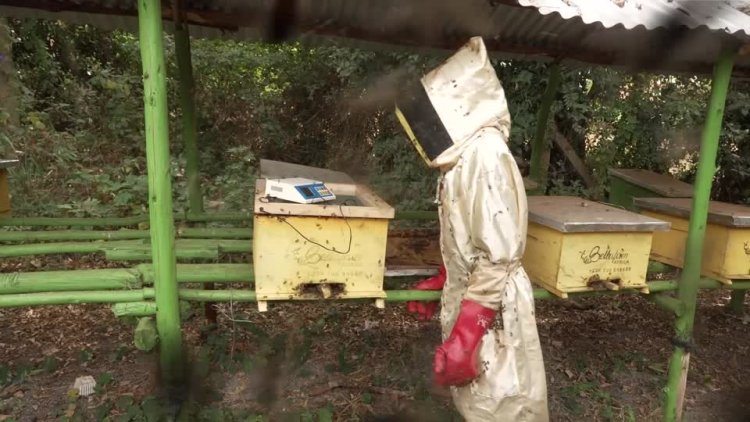
Imagine getting stung by a bee, not by mistake, but by choice. That is the reality for a growing number of patients in Kenya who believe that the sting of a bee can help ease their pain. In Murang’a, central Kenya, a small wellness centre called Bellafarm Africa is attracting people with conditions such as arthritis, stroke-related complications and endometriosis among other pain related conditions. They come to try bee sting therapy, a form of apitherapy that uses bee venom to stimulate the body’s response.
60 year old, Gladys Wanjiru Nguna, is one of them. She suffered a stroke in January 2022 while driving home. Since then, she says, she has struggled with weakness on her left side. “I was doing physiotherapy at home. When I came here, my left leg had no strength at all. Now I can feel the pain from the sting, which means my nerves are active again, she said.”
Each sting is done deliberately. Bees are placed on specific parts of the body and removed after they deliver venom. The therapy is administered by Stephen Kimani, a former civil engineer who studied apitherapy in Romania, before founding Bellafarm Africa. He uses bees that are nearing the end of their life cycle, collected in the evenings when they are pushed out of hives by younger bees.
The practice is not new, but in Kenya, it remains unregulated and largely outside of formal healthcare. Most patients pay out-of-pocket, with each session at Bellafarm, spaced out across the week, costing 500 Kenyan shillings (about 3.80 U.S. dollars). According to Kimani, the majority of those who come report noticeable improvements; others come out of curiosity or after conventional treatments have failed.
Scientists are also paying attention. At Nairobi’s International Centre of Insect Physiology and Ecology, ICIPE, researchers have been studying bee venom and its potential uses.
For now, bee sting therapy remains a small, unconventional option, for those still searching for relief, one bee sting at a time.