U.S. and Australia sign minerals pact
Deal boosts rare earth projects to cut reliance on China
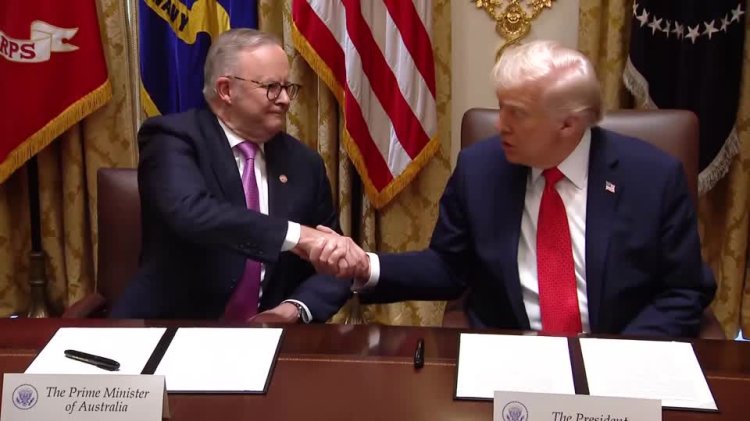
The United States and Australia signed a framework agreement to expand cooperation on rare earths and other critical minerals, aiming to reduce reliance on China’s dominant position in mining and processing. Leaders described the package as an A$13 billion (about $8.5 billion) pipeline of projects; both governments said they would put up funds immediately, with Australia and the U.S. each committing roughly $1 billion toward joint projects in the coming six months. A White House fact sheet also cited plans to invest more than $3 billion in critical-minerals projects over six months and noted Export‑Import Bank letters of interest that could unlock additional financing.
The pact covers mining, processing and refinery work, with the United States signalling it will invest in processing capacity in Australia — including a Pentagon-backed plan for an advanced gallium refinery in Western Australia — and the countries agreeing to cooperate on permitting, pricing, government review rules and project delivery. Officials framed the deal as part of a broader strategy to build resilient supply chains for inputs used in defence systems, electric vehicles, semiconductors and other advanced technologies, countering recent Chinese export controls and policy moves that tightened Beijing’s leverage over supplies.
Both leaders hailed the accord as a step forward for bilateral ties; the agreement was presented as a framework and contains non‑binding elements, meaning outcomes will depend on follow‑through, investment timelines and regulatory work. Analysts warned that shifting supply away from China will be lengthy and costly: China retains large advantages in mining and, especially, refining, and it could take years or decades to scale alternative capacity sufficiently. Industry figures urged measures such as price‑protection clauses to reduce the risk of market manipulation that could undercut new projects.
The summit also reaffirmed support for the AUKUS security partnership, including plans for Australia to acquire U.S. nuclear‑powered submarines and collaborate with the U.K. on a new submarine class. U.S. officials said they will seek to refine and accelerate aspects of the AUKUS timetable. The agreements signal closer U.S.–Australian coordination on economic and security issues in the Indo‑Pacific as Washington and its allies seek to diversify critical‑mineral supply chains and blunt China’s strategic influence.