


NATO drills test low-cost counter-drone tools
NATO forces train in Poland to counter rising drone threats
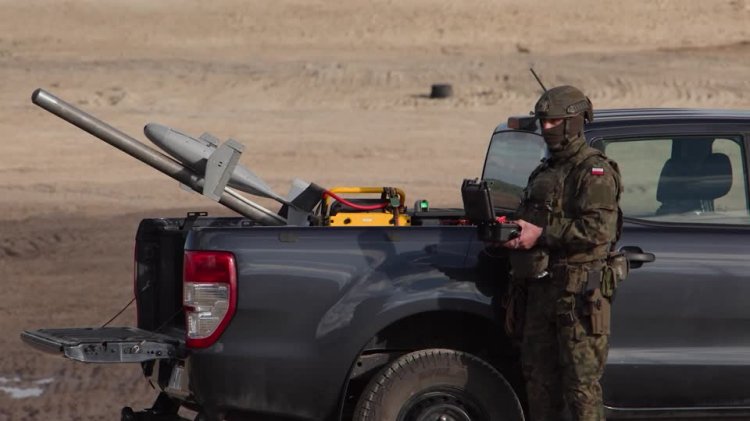
NATO soldiers from several member states conducted counter‑drone exercises in Nowa Dęba, southeastern Poland, as the alliance shifts toward lower‑cost, scalable defences against a rising wave of inexpensive unmanned aerial threats. Personnel from the United States, the United Kingdom and Romania trained alongside Polish forces, reflecting concern on NATO’s eastern flank after multiple recent incursions by Russian drones into allied airspace.
Officials say traditional responses—fighter jets and high‑end surface‑to‑air missiles—are often prohibitively expensive for countering cheap, mass‑produced drones. U.S. Army Brigadier General Curtis W. King stressed the need for lower‑cost sensors and effectors. One promising option demonstrated is an interceptor drone deployed from a pneumatic launcher mounted on a pick‑up truck; General King noted such interceptors can cost about one‑tenth of a Shahed‑type attacker used extensively by Russia in Ukraine.
The exercises come amid reports that Russia is scaling drone and glide‑bomb production massively, a tactic that seeks to overwhelm defenders by exploiting the cost imbalance between cheap strike systems and expensive interceptors. NATO responses under consideration and testing include low‑cost interceptor drones, acoustic detectors, electronic jammers and layered “drone wall” concepts combining multiple affordable technologies rather than relying on scarce, high‑cost missiles.
States on the alliance’s eastern flank are also collaborating with Ukrainian‑developed counter‑UAS technology, pooling resources and using EU‑backed funding for joint procurement to build standardized, mass‑producible capabilities. Yet officials acknowledge persistent gaps in volume, integration and doctrine: current stockpiles and procedures may be insufficient to meet rapid, large‑scale swarm threats, and adversaries are adapting quickly.
The exercises in Poland illustrate NATO’s broader strategic pivot: prioritizing a diversified catalogue of economical, rapidly deployable counter‑drone tools to match the scale and economics of contemporary unmanned threats while preserving high‑end air‑defence assets for other contingencies.