

Zohran Mamdani sworn in as New York mayor
Mamdani pledges a democratic socialist agenda focused on affordability and public services
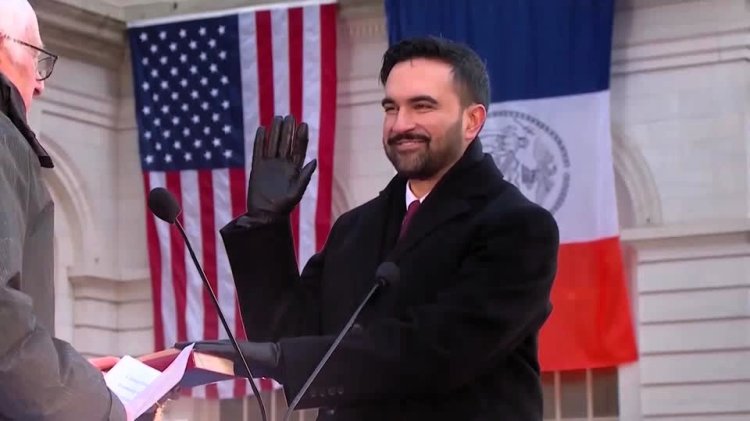
Zohran Mamdani was sworn in as mayor of New York City in a public ceremony on the steps of City Hall, pledging to govern as a democratic socialist and to pursue an agenda centered on affordability and expanded public services. Mamdani, 34, who campaigned on freezing rents and providing free buses and universal childcare, told supporters he will protect and serve all New Yorkers regardless of agreement, and asked for solidarity in confronting cost‑of‑living pressures. He had taken the oath earlier in the decommissioned City Hall subway station, using a Quran in the private ceremony—a first for a New York mayor that reflected his Muslim faith.
Prominent progressive figures, including U.S. Representative Alexandria Ocasio‑Cortez and Senator Bernie Sanders, hailed Mamdani’s election as historic: he will be the city’s youngest mayor in generations and its first immigrant mayor in over a century. Supporters and progressive activists welcomed his bold priorities; labor unions signaled backing for promises to boost wages, strengthen labor protections and expand unionized green jobs tied to climate investments.
In outlining policy aims, Mamdani emphasized aggressive housing reform—expanding rent protections, speeding construction of publicly owned and social housing, and targeting speculative real estate practices—framing housing as a human right. On the economy he proposed progressive taxation to fund transit, education, healthcare access and climate resilience, while pledging reduced transit fares for low‑income riders and investments in public transportation. Public safety initiatives were framed around mental health services, housing and youth programs rather than expanded traditional policing.
The inauguration drew sharp partisan responses: Republicans and business groups labeled his platform radical and warned higher taxes and regulation could deter investment, while many Democrats debated the practicalities of implementing sweeping reforms amid potential pushback from the City Council, state government in Albany and the courts. Mamdani acknowledged inevitable opposition but said his administration is prepared for political battles to rebalance power toward ordinary residents.
Minutes after assuming office, his victory was cast as potentially influential for national politics and the upcoming midterm elections. City officials and supporters emphasized the mandate for change, and Mamdani closed his remarks urging New Yorkers to reclaim power and work collectively to make the city more affordable, equitable and resilient.