


Brazilian women drive acai boom in Ilha de Jussara
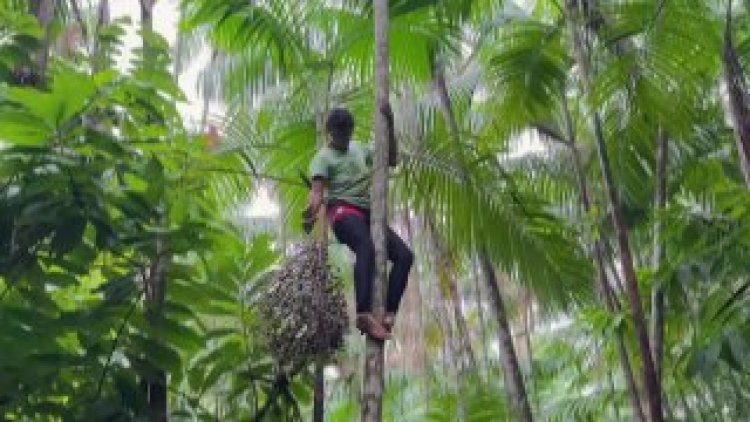
Edna dos Anjos Nascimento Siqueira, known as Bezinha, climbs an acai palm tree in her village of Ilha de Jussara in Brazil.
She's harvesting acai berries, a superfood known for its nutritional benefits, and used globally in juices, cosmetics and supplements.
Growing the tart fruit is a major source of income for the village and production has grown around 50% in the last decade.
That's thanks to Bezinha and a dozen or so other women in the village who fought to secure sources of credit.
"There's a lot of value here, but we haven't yet managed to organize ourselves so that we can earn more. This is our black gold, as we say."
Bezinha is 60 years old and grew up watching her father climb the village's acai trees.
"At first, the husbands took care of the product, of the production. Then the women started to move. Can we organize ourselves?"
She was the first woman to participate in meetings to discuss funding to grow the village business.
According to government sustainable development agency Emater, the involvement of women in such small-scale businesses has grown fast in rural Brazil.
In 2021, almost half of the rural credit from a federal program overseen by Emater that supports smallholder farmers benefited female producers, it said.
The initial investment in projects like the acai of Ilha da Jussara is around $3,300 after that it's financially self-sustaining, according to an agronomist at Emater.
Acai berry production in Brazil grew 15% between 2020 and 2023, according to government statistics.
Para state, where Ilha da Jussara is located, accounts for 94% of the country’s output and is a top exporter of the fruit to companies around the world.
Some 200 people are dedicated to organic acai production in the village. During the harvest, families can make fourfold the region's minimum wage.
Total sales are about $225,000 a year – over 85% of the community's income.
Bezinha says the business has helped villagers prosper.